Douwes Arnold
Hopefuls
–
PORTRAIT
- Navigate to the location
A case of collective rescue.
„I did all this because I had no other choice.“
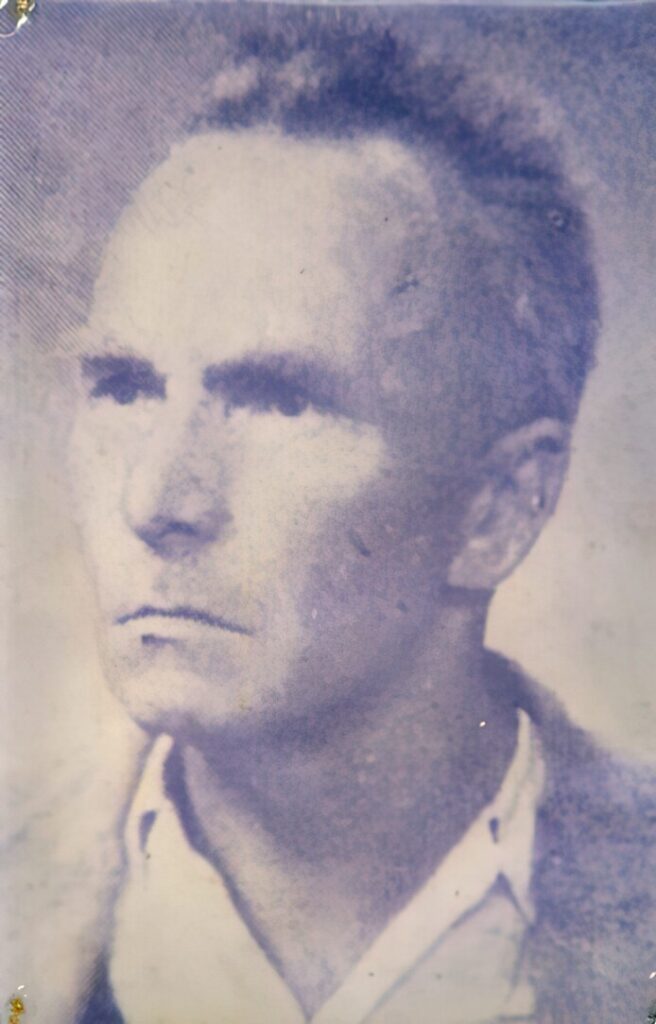
Arnold Douwes
Arnold Douwes From an early age he had a pronounced sense of justice and little respect for authority. He was repeatedly expelled from schools, traveled through North America for several years, and made a living by doing odd jobs. He fought against racial discrimination, joined the Communist Party, and was expelled. Back in the Netherlands, he trained as a gardener in Boskoop.
With the beginning of the German occupation, he took a Arnold Douwes stand against the National Socialist regime. When the Gestapo pursued him for spreading illegal flyers, he fled to Nieuwlande in 1942 and took up work on Johannes Post the farm there. There he worked as a gardener and soon joined the Resistance group Posts.
Together they built one of the largest hiding networks in the Netherlands: Almost every family in the village took in Jewish refugees. They Arnold Douwes coordinated the rescue operations – he picked up persecuted people from Amsterdam or from remote train stations, organized fake papers, procured food, and found safe accommodations.
For the two Jewish boys Herman and Peter, he set up a hiding place in a large room under the floor of the church, where they lived hidden for half a year. Only Douwes himself and the caretaker, who provided them with food and water, knew about this secret hiding place. In that room, Herman and Peter forged passports that were vital for those who were hiding and resistance fighters.
When raids were imminent, Douwes brought the refugees to new hiding places on his bicycle.
When Arnold Douwes he had to go underground in Johannes Post 1943, he took over the leadership of the hidden network. With the Jewish resistance fighter Max Léons who also hid in the village, he expanded it to the surrounding villages in Drenthe.
His diary entries illustrate the enormous pressure he Arnold Douwes faced: for 16 months, he was on the move daily, riding his bicycle from place to place in all weather conditions, always searching for safe hiding places. The difficulty of often persuading people to help is shown by an entry:
„There are many false rumors circulating in Nieuwlande and its surroundings that are intended to intimidate people. The resistance we face is strong – especially from those who refuse to take in persecuted people. Every day we hear excuses that make no sense: not enough space, no hiding place, unruly children or employees… In the end, all these excuses mean only one thing: ‚I don’t want to help. I fear for my property and my freedom.‘“
The Gestapo was searching for Douwes. To avoid being recognized, he changed his appearance several times. Nevertheless, he was arrested on October 19, 1944. On December 11, the day of his planned execution, his comrades freed him from prison in a daring coup.
After the war ended, Arnold Douwes a woman he had met during the resistance married him and moved to South Africa with him. The couple had three daughters and settled in Israel in 1956. In the 1980s, Douwes apparently returned to the Netherlands without his family.
Source: Yad Vashem Collections.
Museum de Duikelaar – Nieuwlande.
On March 25, Arnold Douwes 1965, Yad Vashem honored him as a „Righteous Among the Nations.“.
Bob Moore, Johannes Houwink ten Cate (ed.): Arnold Douwes: The Secret Diary of Arnold Douwes. Rescue in the Occupied Netherlands, 2019. In English.
From 1943 onwards, Douwes kept a diary: he kept his entries in countless marmalade jars and gradually buried them in the garden of his hideout in Nieuwlande.
United States Holocaust Memorial Museum: Oral history interview with Arnold Douwes and Seine Otten, July 17, 1988. See Oral History Catalog of the Museum. In English.
„I did all this because I had no other choice.“
Ardi Goldman Kunst-
und Kulturstiftung gGmbH
Uniongelände
Hanauer Landstraße 188, 60314 Frankfurt am Main