Yorck von Wartenburg
Hopefuls
–
PORTRAIT
- Navigate to the location
It is always worth doing something that you wouldn’t do for yourself. That can be found almost everywhere on this earth.
Personal example of:
–
·
If we imagine ourselves to be something like an elite, or to have a leadership role, then we have failed, namely towards the simple man, the worker, because otherwise the Third Reich would not have been allowed to happen. We have a duty to atone for this to the German worker, therefore we must eliminate this regime.
Peter Graf Yorck von Wartenburg
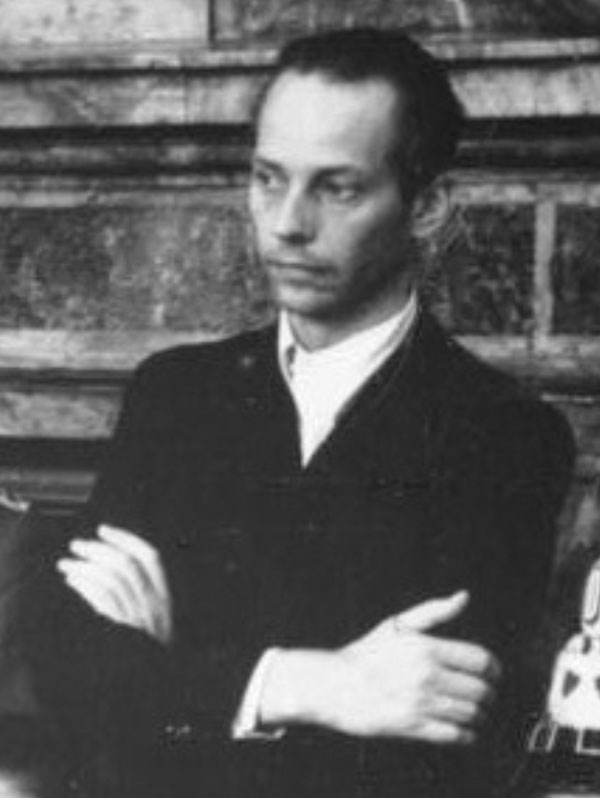
Peter Graf Yorck von Wartenburg Studied law and political science in Bonn and Breslau from 1923 to 1926, he obtained his doctorate there in 1927 and passed his legal exam in Berlin in 1930. In the same year, he married the law graduate Marion Winter. After working as a lawyer and as a lecturer at the „Osthilfe“ and at the Oberpräsidium in Breslau, Yorck worked from 1936 to 1942 as a lecturer on fundamental issues for the Reich Commissioner for Prize-giving in Berlin. Since he refused to join the NSDAP, Yorck was no longer promoted after 1938. Initially, he worked closely with his friends Fritz-Dietlof Graf von der Schulenburg and Ulrich-Wilhelm Graf von Schwerin von Schwanenfeld in the resistance since 1938 and, after the pogroms of November 9, 1938, founded a discussion group on the principles of a new Reich Constitution. As a reserve officer, he was drafted at the start of the war and transferred to the Economic Staff East in the Oberkommando der Wehrmacht in Berlin in 1942.
In January 1940, he began his close collaboration with Helmuth James Graf von Moltke, with whom he initiated and led the discussions of the Kreisau District, which often took place in Yorck's apartment in Berlin-Lichterfelde. Unlike his friend Moltke, who also participated in all three meetings of the Kreisau District, Yorck supported an attempted coup d'état triggered by an assassination attempt. When Claus Schenk Graf von Stauffenberg began advancing the coup plans in Berlin since September 1943, close contact with Yorck ensued. As a State Secretary of a future Reich Chancellor, Yorck remained part of the inner circle of the conspirators until the very end. After the failed coup attempt, Yorck was arrested in the late evening of July 20, 1944 in the Bendlerblock in Berlin; on August 8, 1944, he was sentenced to death by the „Volksgerichtshof“ and murdered in Berlin-Plötzensee the same day.
© Memorial to the German Resistance
Günter Brakelmann: Peter Yorck von Wartenburg, 1904–1944. A Biography. C. H. Beck, Munich 2012.
Matthias Kroeger: On the preciousness of courage and clarity. The political and religious message of the counts Helmuth James von Moltke and Peter York von Wartenburg from the Kreisau Resistance against Hitler and National Socialism. Stuttgart 2010.
Marion Gräfin Dönhoff: For the sake of honor. Memories of Friends from July 20th. 1st edition, Siedler, Berlin 1994.
Detlef Graf von Schwerin: „Then it’s the best minds that get hanged.“ The young generation in the German resistance, Munich 1991.
Marion Countess Yorck von Wartenburg: The strength of silence. A narrative of a life from the German resistance. Cologne 1984.
If we imagine ourselves to be something like an elite, or to have a leadership role, then we have failed, namely towards the simple man, the worker, because otherwise the Third Reich would not have been allowed to happen. We have a duty to atone for this to the German worker, therefore we must eliminate this regime.
Ardi Goldman Kunst-
und Kulturstiftung gGmbH
Uniongelände
Hanauer Landstraße 188, 60314 Frankfurt am Main