Prior, Kopf, 2022
The Art Walk
Kopf, 2022
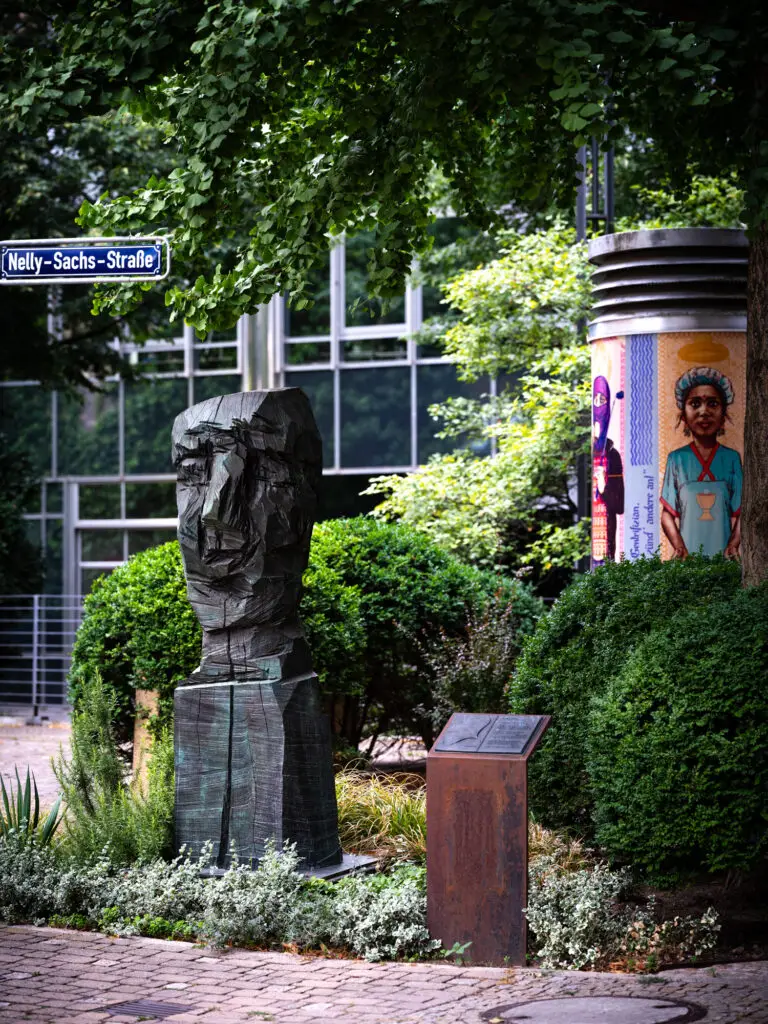
Every material is a challenge, whether it is a six-metre-tall tree trunk or a piece of paper.
EDUCATION
- Navigate to the location
A Closer Look at the Work
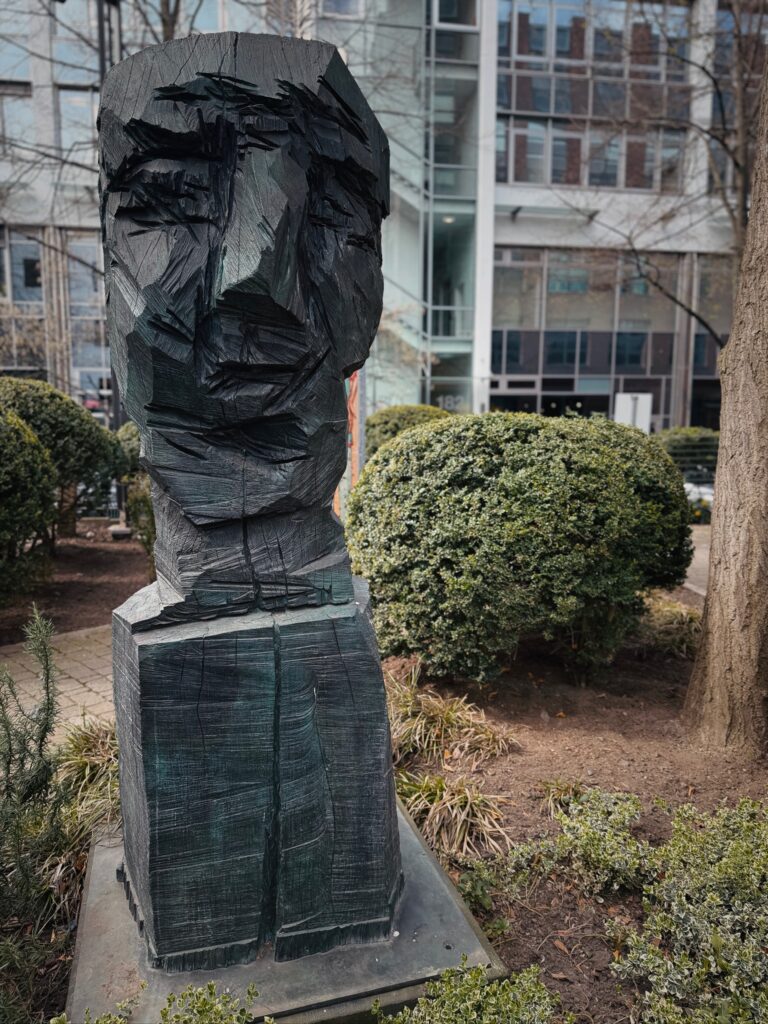
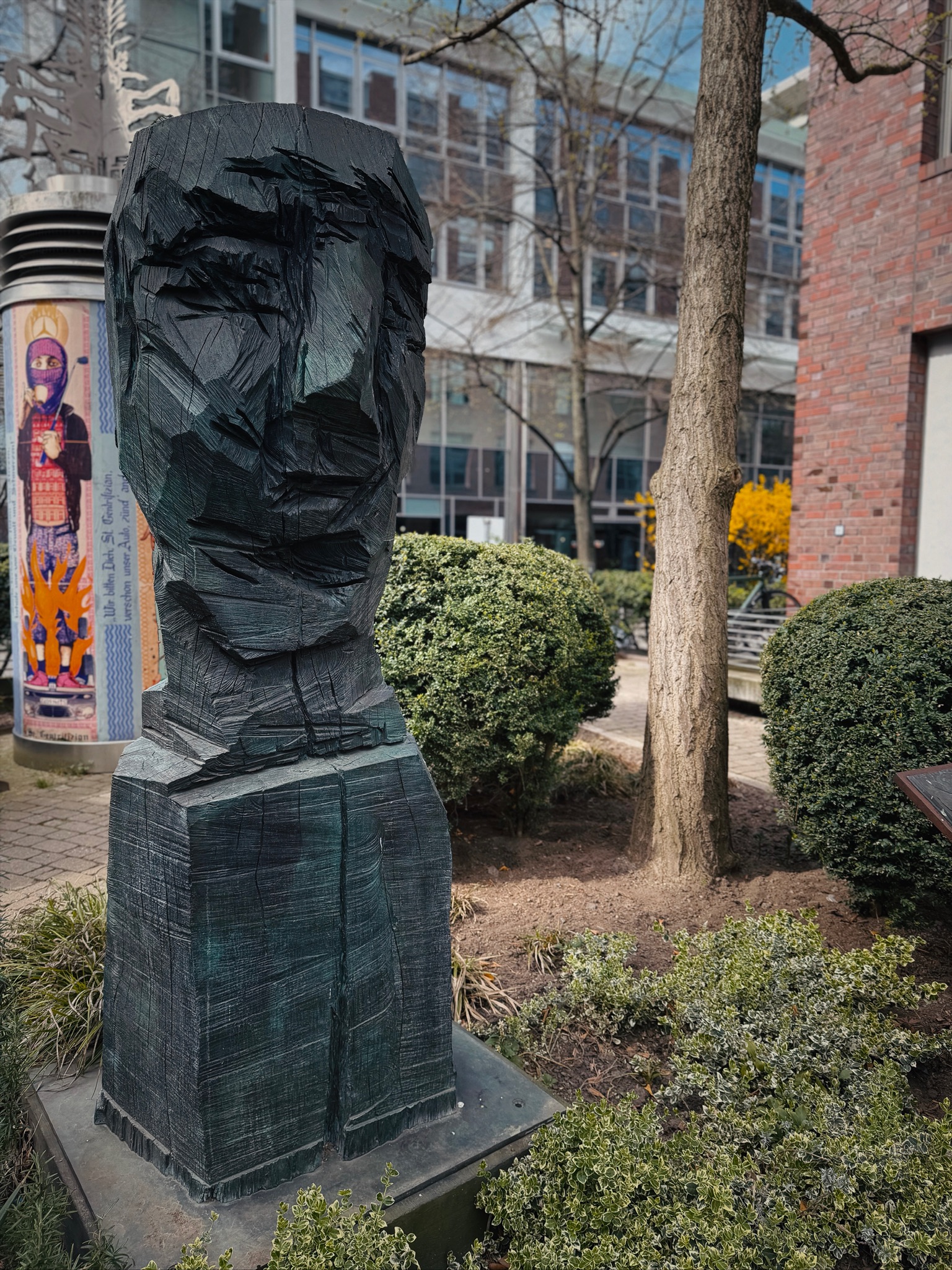
Der „Kopf“ von Klaus Prior steht nicht allein.Er ist Teil eines stillen Triptychons aus Skulptur, Wort und Natur: der bronzene Denker, die Stele mit Goethes Ginkgo-Gedicht und der gewachsene Ginkgobaum selbst.Was einst als kleiner Baum gepflanzt wurde, erhebt sich heute mächtig über den Platz – als lebendige Zeitspur, als Erinnerung daran, dass Gedanken Wurzeln schlagen können.
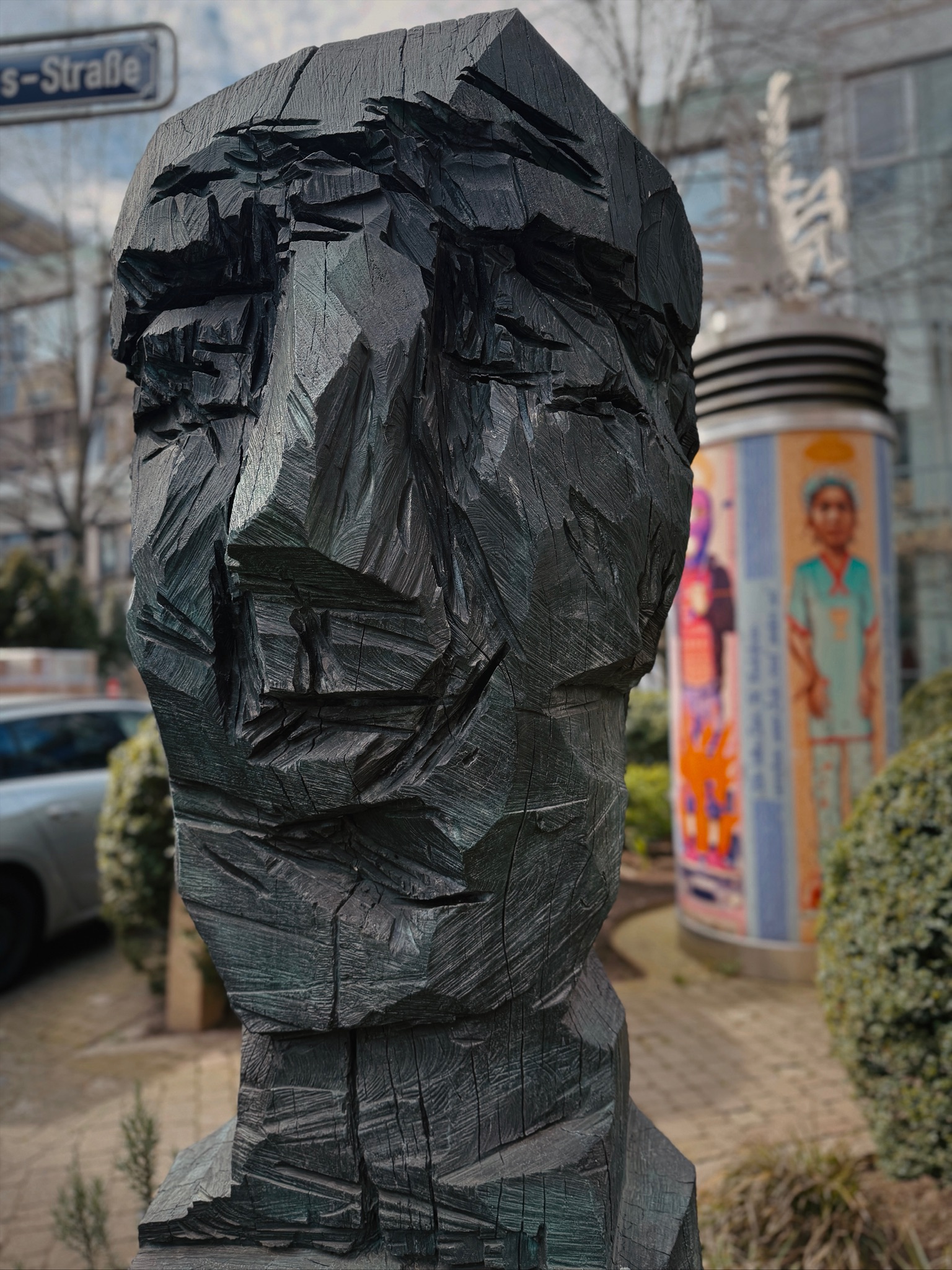
Die dunkle, schwarz-grüne Patina der Bronze wirkt wie gealterte Zeit.Dabei trägt die Figur noch immer die Spuren ihres Ursprungs in sich: die rohe Kraft der Säge, die Schnitte des Holzes, die sichtbaren Verletzungen der Bearbeitung.Der Kopf erscheint nicht idealisiert, sondern durchlebt – wie ein Gesicht, das Denken nicht versteckt, sondern in Furchen eingeschrieben trägt.
In seiner Stille erinnert er an jene großen Stimmen der deutschen Romantik und Aufklärung: an Goethe, Schiller, Kleist oder Büchner – an Dichter und Denker, die das Menschsein zwischen Freiheit, Schmerz und Verantwortung befragten.Vielleicht liegt darin die eigentliche Nähe zum Ginkgo.Denn Goethes Gedicht beschreibt das Doppelwesen eines Blattes, das zugleich eins und zwei ist – Sinnbild für Einheit und Gegensätze, für Wandel und Beständigkeit.
Auch Priors „Kopf“ lebt aus diesem Spannungsfeld.Er wirkt zugleich schwer und wach, verletzlich und unbeugsam, vergangen und gegenwärtig.Wie Michel Kohlhaas oder Werther trägt er jene romantische Unruhe in sich, den Widerstand des inneren Menschen gegen Erstarrung und Vergessen.
So wird dieser Ort zu mehr als einem Platz mit Skulptur und Baum.Er wird zu einem Denkraum über Zeit, Geist und Vergänglichkeit – und über die leise Unsterblichkeit menschlicher Gedanken.
About the Artist
Klaus Prior’s artistic work takes shape without preparatory sketches or models. Depending on their size, his sculptures and works on canvas and paper are often completed in a single, concentrated session. Spontaneity and condensation define the process. Through a form of psychic automatism, Prior gives visual expression to his state of mind at that moment. The works reflect raw, intuitive sensations and immediate emotional states.
Using spontaneously chosen colours, impulsive gestures and swiftly applied brushstrokes, the artist develops the silhouettes of his motifs out of an inner necessity. Crossing the boundaries of form, deliberately exaggerating heads, faces, limbs and gestures, and leaving the traces of the working process visible are central stylistic devices. They embody the expression of the moment and give the works their compelling presence.
As a sculptor, Prior works primarily with wood, one of the oldest artistic materials. His iron sculptures also originate in wooden works. He consistently avoids narrative contexts, attributes and representational references that might place his figures within particular stories. The figures stand on their own: existential, vulnerable and isolated.
Prior’s art is deeply shaped by his childhood and youth in post-war Germany, by his awareness of the human condition and its fragility, and by the lived realities of an industrial working-class culture shaped by many nationalities. His paintings and sculptures explore pain, injury and isolation as recurring conditions of human existence.
As a member of the generation born after the perpetrators, Prior rejected their repression of the past and refusal to acknowledge guilt. He avoided conscription in West Germany during the economic miracle by emigrating to Switzerland. From there, he followed the Auschwitz trial in Frankfurt am Main closely and, although he bore no personal guilt, engaged deeply with Germany’s crimes against humanity.
This historical awareness and his engagement with philosophy after Auschwitz underpin his thinking and creative work. Prior’s oeuvre expresses an existential struggle with memory, responsibility and the fragile dignity of human beings.
© Stefan Gröpper Photography / Marie Ruck
Ardi Goldman Kunst-
und Kulturstiftung gGmbH
Uniongelände
Hanauer Landstraße 188, 60314 Frankfurt am Main