Bielski
Hopefuls
PORTRAIT
- Navigate to the location
We may be killed, but we will fight with all our strength to save even more lives.
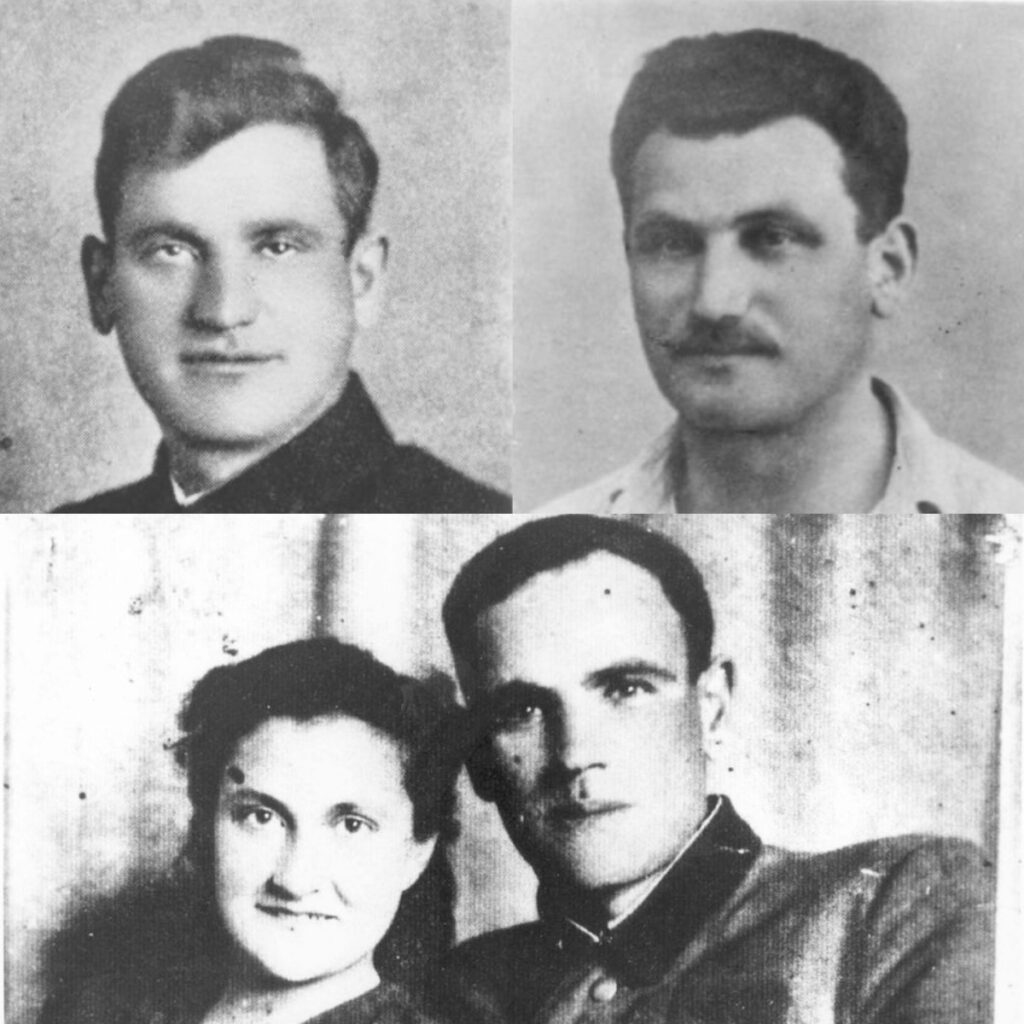
Asael Bielski
1908 – 1945
Stankiewicze (Stankewitschy) · unknown
Tuvia Bielski
May 8, 1906 – June 12, 1987
Stankiewicze (Stankewitschy) · New York
Zusia (Sus) Bielski
1912 – 1995
Stankiewicze(Stankewitschy) · New York
,Do we only want to save our own skin? Is that our goal? As long as it is possible, we will do it even if it means freeing just one single Jew from the clutches of the Nazis.“
Tuvia Bielski
Asael Bielski He grows up on his parents’ farm in Stankiewice (now Stankewitschy, Belarus), which was then part of Poland. When the Wehrmacht occupied the region in June 1941, Bielski is persecuted as a Jew. He flees into the forest near Nowogródek (now Nawahrudak) and establishes a forest camp there. His brothers Sus, Aron and Tuvia join him. The brothers arm themselves and help numerous Jewish women and men escape from the surrounding ghettos. In the forest, they establish a partisan unit under the leadership of Tuvia Bielski; Asael becomes his deputy. The unit sabotages railway lines, bridges, and food transports that are important to the German occupiers. Jewish women and men who do not fight remain in the forest camp and are protected and provided for by the partisan unit. Approximately 1,200 Jewish women and men survive under the protection of the partisan unit, mostly women, children, and elderly people.
In 1944, Belarus is liberated and the partisan unit is disbanded. Asael Bielski is drafted into the Red Army. In 1945, he dies in combat with German troops. The same year, his daughter is born, who is named Asaela after him.
© Memorial to the Silent Heroes
Tuvia Bielski He grew up with eleven siblings on his parents' farm. After his military service, he became a businessman and, from 1939 onwards, an employee of a company in Lida, Belarus.
When the Wehrmacht occupied Belarus in June 1941, Bielski was persecuted as a Jew. He fled into the nearby forests and joined his brothers Asael, Sus, and Aron Bielski there in the spring of 1942. The brothers established a forest camp and armed themselves. They helped numerous Jewish women and men escape from the surrounding ghettos. In the forest, they founded a partisan unit under the leadership of Tuvia Bielski and sabotaged railway lines, bridges, and food transports that were important to the German occupiers. Jewish women and men who did not fight remained in the forest camp and were protected and provided for by the partisan unit. Tuvia Bielski took in all the Jewish women and men, regardless of age or gender. Approximately 1,200 Jewish women and men survived under Bielski's protection, mostly women, children, and elderly people.
After the war, Tuvia Bielski initially lived in Israel. In 1956, he emigrated with his family to the USA.
© Memorial to the Silent Heroes
Sus Bielski He grew up with eleven siblings on his parents’ farm in Stankiewicze (now Stankewitschy). When the Wehrmacht occupied this region in June 1941, he was persecuted as a Jew. His parents and two of his siblings were murdered. Sus Bielski hid with his brother Asael in the forest near Nowogródek (now Nawahrudak). Soon after, the brothers Tuvia and Aron Bielski and other relatives joined them. The brothers armed themselves to defend themselves. They helped numerous Jews escape from the surrounding ghettos. In the forest they founded a partisan unit under the leadership of Tuvia Bielski. Jewish women and men who do not fight remain in the forest camp and are protected and provided for by the partisan unit. About 1,200 Jewish women and men survive thanks to Bielski-Brüder the partisans, mostly women, children and elderly people.
In July 1944, the Red Army liberated the area around Nawahrudak. The forest camp and the combat unit are disbanded. In 1945, Sus Bielski emigrates to Palestine and later lives with his family in the USA.
© Memorial to the Silent Heroes
- Peter Duffi: The story of three brothers who saved 1200 Jews from the Nazis in the forests of Belarus.
Frankfurt am Main 2005. - Franziska Reiniger: Solidarity in the forest. The Bielski-Brüder. Yad Vashem, online.
- Defiance – For my brothers who never gave up. Directed by Edward Zwick. USA 2008. German premiere 2009.
,Do we only want to save our own skin? Is that our goal? As long as it is possible, we will do it even if it means freeing just one single Jew from the clutches of the Nazis.“

Ardi Goldman Kunst-
und Kulturstiftung gGmbH
Uniongelände
Hanauer Landstraße 188, 60314 Frankfurt am Main