Post Johannes
Hopefuls
–
PORTRAIT
- Navigate to the location
A case of collective rescue.
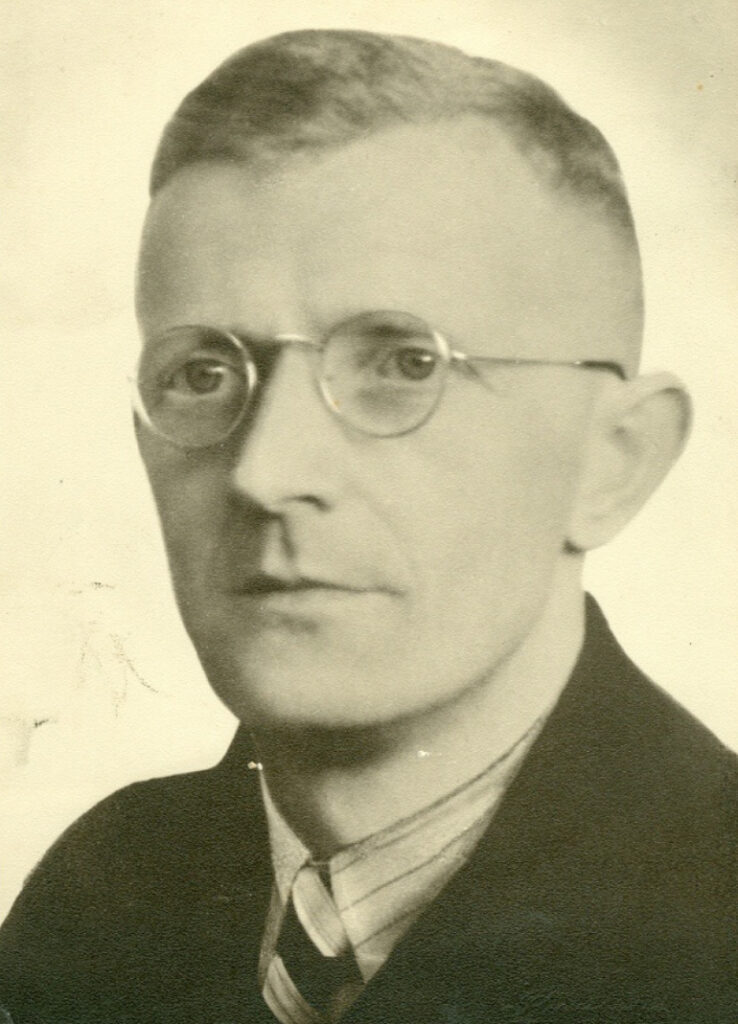
Johannes Post He was born in 1906 as the youngest of eleven children. He was a devout Christian and early interested in politics. Until 1942 he put up less resistance by refusing to pay income tax and distributing illegal newspapers. With the increasing severity of the German occupation policy, he joined the active resistance and helped persecuted people, including the demonstrator Arnold Douwes whom he hid in his house in Nieuwlande.
Douwes was a staunch opponent of National Socialism and made Johannes aware of how urgently help for persecuted Jews was needed. Together they began bringing Jewish refugees from Amsterdam to Nieuwlande. Post found shelter for them among relatives, friends, and neighbors. Gradually, a network was formed that enabled hundreds to survive the underground.
From 1943 onwards, Post played a leading role in the armed resistance. He participated in raids on municipal offices and distribution points to obtain forged documents and ration cards. He supplied those to those who were hiding and also supported other resistance groups. He was part of a far-reaching network that emerged from the spiritual resistance of the Protestant churches. When the security police wanted to arrest him, he initially escaped.
On June 23, 1944, a planned raid by Post on the distribution point in Haarlem failed. His friend Jan Wildschut was arrested and sent to prison. To free him from prison, Post broke an unwritten law: he trusted an SS man who promised him secret access. But the attempt to free him failed.
On the night of July 15, 1944, 16 resistance fighters attempted to liberate Wildschut. However, they had been betrayed – the occupiers were already waiting for them. Some of the men were killed, others were seriously injured. Most were arrested – including Johannes Post, who was not involved in the action itself but was also betrayed. After a brief interrogation, he was sentenced to death and together with the others were shot dead the morning of July 16, 1944.
Johannes Post stands for courage and determination in the Dutch resistance. His selfless actions saved countless lives and make him a role model for civil courage and humanity to this day.
Sources: KZ Leonberg Memorial; Yad Vashem
- After the war, he received Johannes Post numerous honors. Upon a royal order, the Verzetskruis (1940–1945) was posthumously awarded to him; in 1953, the United States awarded him the Silver Medal of Liberty in The Hague.
- In 1965, Yad Vashem honored him as a „Righteous Among the Nations“.
- In 1984 he was also posthumously awarded the Resistance Decoration Cross.
- His memory is also present in public spaces: in 2014, an information board was unveiled in the resistance quarter of Gouda and a street was named after him. In Havelte, a Dutch army barracks bears his name, as do bridges in Zwinderen and Leiden. Many schools, squares, and streets in the Netherlands bear his name Johannes Post.
Anne de Vries: The life story of Johannes Post. Nijkerk 2013, 14th edition. In Dutch.
Ardi Goldman Kunst-
und Kulturstiftung gGmbH
Uniongelände
Hanauer Landstraße 188, 60314 Frankfurt am Main