Reichwein Adolf
Hopefuls
–
PORTRAIT
- Navigate to the location
It is always worth doing something that you wouldn’t do for yourself. That can be found almost everywhere on this earth.
Personal example of:
–
·
There are no shortcuts in the decision.
Adolf Reichwein
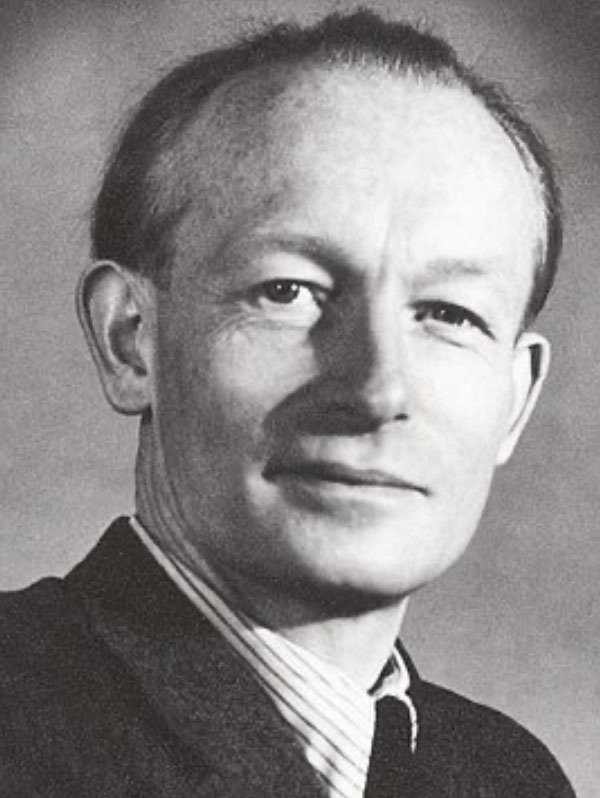
After the First World War, the educator worked Adolf Reichwein to establish folk high schools, adult education, and teacher training. He was a special confidant of the Prussian Minister of Culture Carl Heinrich Becker. In 1930, Reichwein became a professor of history and citizenship at the newly opened Pedagogical Academy in Halle and was dismissed by the National Socialists there for political reasons on April 24, 1933. He spent the following years as a countryside schoolteacher in Tiefensee near Berlin, later as a museum educator at the State Museum for German Folk Culture in Berlin.
Since 1940, Reichwein has had contact with the resistance circles around Wilhelm Leuschner and Julius Leber and is himself a member of the Kreisauer Kreis. In the summer of 1944, he not only had contacts with the military opposition, but also met with the communist resistance fighters Anton Saefkow and Franz Jacob on June 22, 1944. Adolf Reichwein The participation of a Gestapo officer in this meeting led to the arrest of Julius Leber in early July 1944 and his Adolf Reichwein execution by the Volksgerichtshof on October 20, 1944.
© Memorial to the German Resistance
Near the Plötzensee extermination camp, Reichweindamm was named after him. Numerous schools in Germany bear his name.
The cutter Adolf Reichwein Since 1949, the name Reichwein has been attached to it in the courtyard of the German Maritime Museum in Stralsund.
A Reichwein bust has stood in the Schmargendorf town hall in Berlin since the 1950s, created by the sculptor Knud Knudsen. In 1968, the city library housed in the town hall was named the „Adolf Reichwein Library.” The building of the SPD Saxony-Anhalt Regional Office in Halle (Saale) is called the Adolf Reichwein House.
Stumbling blocks in Berlin-Wannsee and in Vitte (Hiddensee) are a reminder of Adolf Reichwein.
Gabriele C. Pallat, Roland Reichwein, Lothar Kunz (ed.): Adolf Reichwein: Educator and Resistance Fighter. A Life in Letters and Documents (1914–1944). Paderborn 1999.
Ullrich Amlung Adolf Reichwein: 1898–1944. A portrait of the reform educator, ethnographer, and resistance fighter. Edition. Frankfurt am Main 1999.
Ullrich Amlung: „…there are no shortcuts in the decision.“ Adolf Reichwein 1898-1944. Reform educator, socialist, resistance fighter. Marburg 1994.
Johannes Tuchel: Contacts between Social Democrats and Communists in the summer of 1944. On the historical significance of June 22, 1944. In: Dachauer Hefte 11 (1994), pp. 78 ff.
Joachim Meißner: – Adolf Reichwein Pioneer of media pedagogy. The resistance fighter and reform educator Adolf Reichwein developed pioneering concepts for media pedagogy as early as the 1930s. SWR2 Wissen, 19.06.2020.
Alfred DelpHis last letter to his fellow brothers
February 2, 1945
Dear fellow brothers and sisters, now I must take the other path. The death sentence has been requested; the atmosphere is so filled with hatred and hostility that its announcement and execution are to be expected today. […]
The actual reason for the conviction is that I am a Jesuit and have remained so. A connection to July 20 could not be proven. The Stauffenberg charge was also not upheld. Other charges that actually involved knowledge of July 20 were much milder and more factual. The atmosphere was so filled with hatred and hostility.
Basic principle: a Jesuit is a priori the enemy and opponent of the Reich. Thus, on the one hand, the whole thing has been a comedy, but on the other hand, it has become a theme. This was not a trial, but a function of the will to destruction.
There are no shortcuts in the decision.
Ardi Goldman Kunst-
und Kulturstiftung gGmbH
Uniongelände
Hanauer Landstraße 188, 60314 Frankfurt am Main