Running to tears
Hopefuls
–
PORTRAIT
- Navigate to the location
It is always worth doing something that you wouldn’t do for yourself. That can be found almost everywhere on this earth.
If we must already accept an era in which the greater probability of an early death exists, then we should at least ensure that there is a reason to die—to have lived.
Adam von Trott zu Solz, 1935
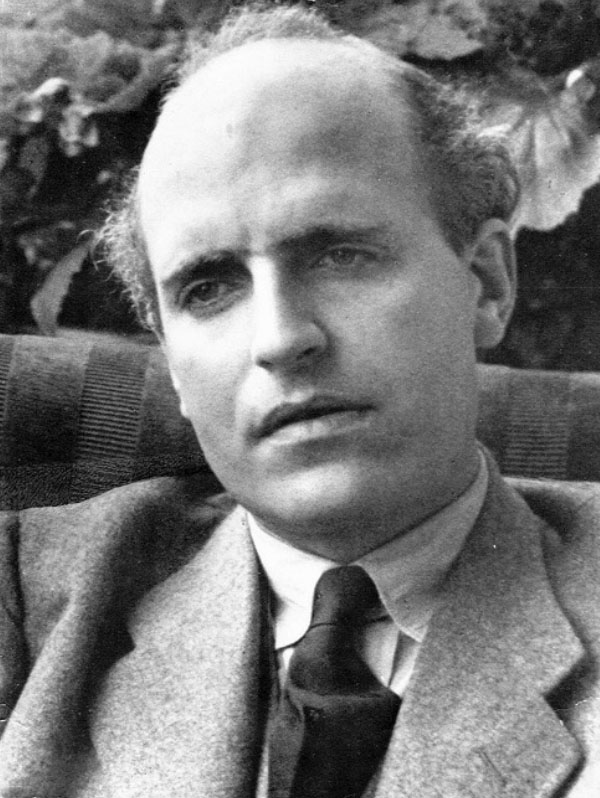
Born as the fifth child of the Prussian Minister of Culture August von Trott zu Solz in Potsdam, Adam von Trott grew up in Berlin, Kassel, and on the Hessian family estate of Imshausen in an intellectually open environment. From 1927 onwards, he studied law in Munich, Berlin, and Göttingen. After receiving his doctorate, he accepted a Rhodes scholarship in Oxford and gained a large circle of English friends. He studied „PPE“ (Politics, Philosophy, Economics) and continued his legal apprenticeship in Germany from 1933 onwards. In 1936 he passed the Assessorexamen. He maintains connections with the socialist underground. From 1937/38 he spent a year as a Rhodes scholar in China. His numerous foreign visits deeply influenced him.
Upon returning to Germany, he contacted other opponents of the regime, including Helmuth James Graf von Moltke Hans von Dohnanyi, and in 1939 attempted to win the British government to cooperation. After the war began, he campaigned in the USA for the German resistance and became an employee in the information department of the Foreign Office in 1940, later head of the India desk and in 1943 legation council member. From 1942 to 1944, he frequently traveled to Switzerland and Sweden and made efforts to establish contacts with the Allies in order to secure the planned coup from a political perspective.
As a key member of the Kreisau District, he led the discussion on the foundations of future German foreign policy at the third Kreisau District Congress in Pentecost 1943. From autumn 1943 onwards, he worked closely with Claus Schenk Graf von Stauffenberg and Julius Leber. Five days after the failed assassination attempt on July 20, 1944, he was arrested, sentenced to death by the „Volksgerichtshof“ on August 15, 1944, and hanged in the Strafgefängnis Berlin-Plötzensee on August 26, 1944.
© Memorial to the German Resistance
Foundation Gedenkstätte Deutscher Widerstand (ed.): Thematic catalogue 12. The Kreisauer District. Berlin 2018, 2nd edition.
Clarita von Trott zu Solz: A Life Description Adam von Trott zu Solz. With an introduction by Peter Steinbach. 2nd expanded edition, Berlin 2015.
Ludwig Mehlhorn (ed.): Certainty in Resistance, Adam von Trott on the 100th anniversary. Berlin 2011.
Benigna von Krusenstjern: „that it makes sense to die – to have lived“ Adam von Trott 1909-1944. Biography. Göttingen 2009.
Foundation Gedenkstätte Deutscher Widerstand (ed.): Clarita von Trott zu Solms: Adam von Trott zu Solz. A Life Description. Berlin 2009.
Henry O. Malone: Adam von Trott zu Solz The career of a conspirator 1909-1938. Berlin 1986.
How to provide resistance? Adam von Trott's work through time. YouTube.
Permanent exhibition of the Adam von Trott Foundation in Solms.
At the Trottenpark, 36179 Bebra-Imshausen. The exhibition can be visited from Monday to Friday between 09:00 and 16:00 upon prior announcement. 06622 42440.
Excerpt from Adam's farewell letter to his wife Clarita
August 26, 1944
Dear Claritchen,
Unfortunately, this is probably the last of them. Hopefully you still received my last long letter. Above all: Forgive me for all the deep pain I must have caused you. Be assured: I am still with you in my thoughts and I die in deep confidence and faith.
Today it is a clear „sky of Beijing“ and the trees are rustling. Teach our dear, sweet little ones these signs and the deeper ones of our God to understand them gratefully, but also to be active and combative.
I love you very much. There is so much more to write – but there is no more time. God bless you – I know that you will not be crushed and that you will fight for a life in which I will be there for you, even though you seem to be completely alone. I pray for your strength – and please do the same for me. In the last few days I have read Purgatorio, as well as Maria Stuart and, which strangely touched me very deeply (…).
Otherwise, I had little of this – but much of it within me that I could move around calmly and clarify. So don’t worry about me – everything is basically clear, even if it’s deeply painful. (…)
I embrace you with all my heart and know that you are with me. God bless you and the little ones with undying love
Yours
Adam
If we must already accept an era in which the greater probability of an early death exists, then we should at least ensure that there is a reason to die—to have lived.
Ardi Goldman Kunst-
und Kulturstiftung gGmbH
Uniongelände
Hanauer Landstraße 188, 60314 Frankfurt am Main