Schottmüller Oda
Hopefuls
–
PORTRAIT
- Navigate to the location
A resistance network that never called itself that.
Personal example of:
–
·
„Crazy as it may sound - but I’m going to curl my hair again today with my own curls, etsch. Then I’ll enjoy a big box of chocolates... I’ll die with a good conscience. Will our judges ever be able to say the same thing?“
The last words of Oda Schottmüller
Source: Geertje Andresen: Oda Schottmüller""The Dancer," the sculptor and Nazi opponent, 1905-1943. Berlin 2006.
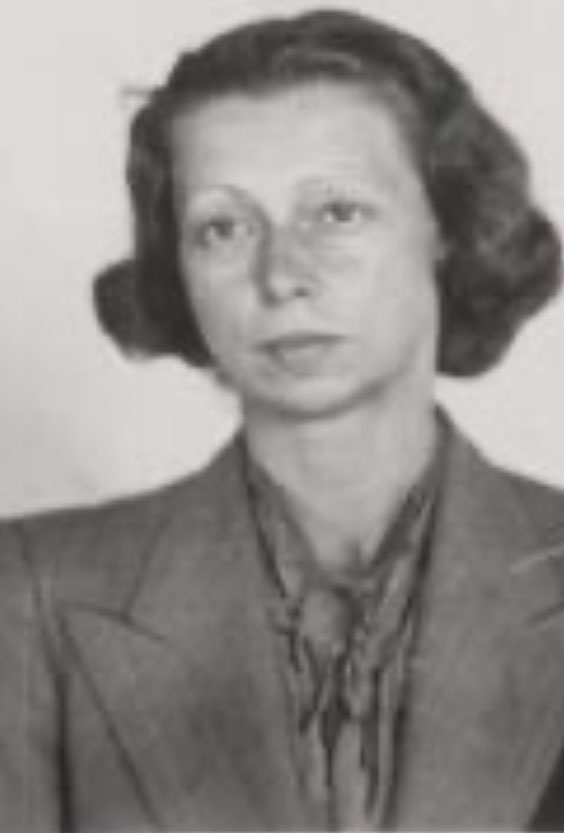
Oda Schottmüller She was born in 1905 in Posen. After graduating from the reform-pedagogical Odenwald School in 1923, she began an artistic apprenticeship in Pforzheim and Frankfurt am Main from 1923 onwards. From 1929 onwards, she studied sculpture in Berlin with Milly Steger and took dance lessons from Berthe Trümpy and Vera Skoronel at the same time. In 1931, she opened her first sculptor’s studio in the Malschule of Johannes Itten in Posen. Here she combined her two professions in mask dance and developed her own dance aesthetics, with which she began performing regularly as a soloist in 1934 and celebrated great success.
Her relationship with the communist sculptor Kurt Schumacher brought her into contact with the resistance circle around in Harro Schulze-Boysen the late 1930s, where, among other things, frank discussions were held on artistic and political issues and actions were prepared against the Nazi dictatorship.
On September 16, Oda Schottmüller 1942, she was arrested in her studio in Berlin. The Gestapo assigned her to the „Red Chapel“ investigative unit and accused her of having made her studio available for radio experiments. Although this accusation cannot be proven, the Reich War Tribunal sentenced her to death. She was beheaded on August 5, 1943 in Berlin-Plötzensee.
Her body will be donated to the anatomy department at Charité for research purposes. There is no grave for her. Today, among others in Berlin, a plaque in front of her last studio at Reichsstraße 106 and a memorial stone on the Old St. Matthäus Cemetery in Schöneberg commemorate the artist.
© Memorial to the German Resistance. Women in the Resistance 1933-1945.
- In Oda Schottmüller 1969 he was posthumously awarded the Soviet Order of the Red Star.
- In November 2014, the name of Schottmüllerstraße, which had previously been named after the bacteriologist and NSDAP member Hugo Schottmüller, was changed to that of Schottmüllerstraße.
- On September 23, 2016, a commemorative stone was placed in front of her former home at Reichsstraße 106 in Berlin-Charlottenburg.
- On August 25, 2019, a memorial stone for Oda Schottmüller was finally unveiled at the Old St. Matthias Cemetery in Berlin-Schöneberg.
- Geertje Andresen: The dancer, sculptor, and anti-Nazi activist Oda Schottmüller 1905–1943. Berlin 2005. The publication is also a companion book to the Oda-Schottmüller exhibition (16.11.2006 – 21.01.2007) of the German Dance Archive in Cologne and the German Resistance Memorial.
- Geertje Andresen: Who was he Oda Schottmüller? Two versions of his biography and their reception in the former Federal Republic of Germany and the GDR, Berlin 2012.
Letter of farewell to her mother – excerpt
August 5, 1943
My dear little Teo!
Now we have not been able to see each other anymore + I have to say goodbye to you in this way. Be brave, remember that you will experience a good time again. You have always stood by me in recent years + by your faithful help you have made so much possible that a thank you is almost impossible. But you know it yourself best + you will always remember: what I achieved artistically was only possible through the support I had again and again from you in the most difficult transition years. That everything is now gone – lies in my line of work – I never wanted to grow old – slowly going gray is certainly not pleasant. The last few months have been quite difficult for me – especially the fact that I was cut out of the actual work became increasingly unbearable – but that has now been overcome. (…).
There is still a lot – perhaps the most important thing – unspoken between us – it’s better that way.
Be warmly hugged + kissed,
my dear mother,
from Your Oda
Source: EMPORE Anti-War Museum „The Little Soldier“ and Archives Susanne and Dieter Kahl. Caption – Memorial to the German Resistance. Women in the Resistance 1933-1945.
„Crazy as it may sound - but I’m going to curl my hair again today with my own curls, etsch. Then I’ll enjoy a big box of chocolates... I’ll die with a good conscience. Will our judges ever be able to say the same thing?“
Ardi Goldman Kunst-
und Kulturstiftung gGmbH
Uniongelände
Hanauer Landstraße 188, 60314 Frankfurt am Main