Schulze-Boysen Harro
Hopefuls
–
PORTRAIT
- Navigate to the location
A resistance network that never called itself that.
Personal example of:
–
·
„Believe with me in the just time that will make everything mature!“
Harro Schulze-Boysen
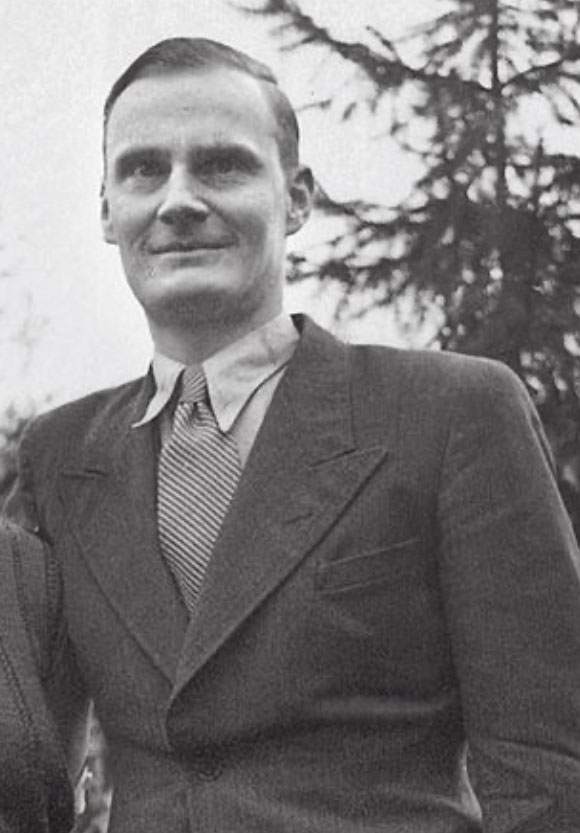
Harro Schulze-Boysen, a great-nephew of Admiral Alfred von Tirpitz, became involved in the Young German Order in the late 1920s. As editor of the magazine „gegner“, he had numerous contacts with various political groups in 1932/33. After the banning of „gegner“ and a short-term imprisonment in a Berlin SA torture cell, Schulze-Boysen began his training at the Air Traffic Control School in Warnemünde in May 1933. Active in the Reichsluftfahrtministerium since April 1934, a close circle of friends and opponents formed in the mid-thirties, to which his wife Libertas, Elfriede Paul, Walter Küchenmeister, Elisabeth and Kurt Schumacher others belonged. Oberleutnant Schulze-Boysen, in the Attaché Group of the Reich Air Ministry, is together with Arvid Harnack the leading head of the resistance organization Red Chapel. Harnack and Schulze-Boysen inform a representative of the Soviet Embassy in the first half of 1941 about the attack plans against the Soviet Union. Schulze-Boysen is prepared to maintain contact with Moscow during the war via a radio transmitter. Due to technical problems, the transmission cannot be established. Schulze-Boysen wins after the 22nd. June 1941: New associates join him; they participate in the drafting of flyers, in a paper-clip campaign, and have contacts with Hitler opponents of various political and ideological orientations. In late October 1941, he receives a courier from Brussels of the Soviet military intelligence service for a conversation. From an deciphered telegram from Moscow to Brussels, the Gestapo learns the names and addresses of Schulze-Boysen and arrests him on August 31, 1942. On December 19, 1942, he is sentenced to death by the Reich War Tribunal and on December 22, he is executed. Murdered in December 1942 by order of Hitler in Berlin-Plötzensee.
© Memorial to the German Resistance
- In 1964 Harro Schulze-Boysen the GDR honored him with a special postage stamp, in 1967 the NVA named its news regiment 14 after him, and in 1969 he posthumously received the Soviet Red Banner Order.
- In 1972, a street in Berlin-Lichtenberg was named after Harro Schulze-Boysen Libertas; other streets bear its name in Duisburg, Leipzig, Rostock, Magdeburg, and Ludwigsfelde.
- In 1991, the LWL Landesmuseum Münster awarded Carl Baumann's painting Red Chapel Berlin for the „Picture of the Month“. In 2009, the Harro-Schulze Boysen Way was inaugurated in Kiel on the occasion of his 100th birthday.
- In 2017, Stolpersteine for Harro Libertas Schulze-Boysen were installed at Schloss Liebenberg.
- Hans Coppi: Harro Schulze-Boysen. A biographical study. Koblenz 1993.
- Foundation Gedenkstätte Deutscher Widerstand (Hrsg.): Thematic catalogue 14 „The Red Chapel“. Berlin 2018, 2nd revised edition.
- Johannes Tuchel: „…considering how young we are, one cannot believe in death.“ Liane Berkowitz, Friedrich Rehmer and the resistance actions of the Berlin Red Chapel. Berlin 2022.
Podcast Rote Kapelle. On a walk through Berlin, you will learn the story of the legendary resistance group. A project by Stefan Roloff, produced by the German Resistance Memorial and When 6 is 9 Productions GmbH. In German, English and Spanish.
Harro Schulze-BoysenHis farewell letter to his parents – excerpt
Berlin-Plötzensee, the 22nd of December 1942
Beloved parents!
It is now time! In a few hours I will step out of this self. I am completely calm and I ask you to accept this as well. Today, important things are happening all over the world; a life that is about to end is not very significant. What has happened, what I have done – I don’t want to write about that anymore. Everything I did was done from my mind, my heart, and my conviction, and within this framework, you as my parents must accept the best. That is why I am asking you!
This death suits me. Somehow I have always known about it. It is my own death – as Rilke once put it!
My heart aches when I think of you dear ones. (Libertas is close to me and shares my fate at the same time!) You are facing loss and shame at the same time, and you did not deserve that.
I hope not only – I believe that time will alleviate your suffering. I was only a temporary agent in my sometimes unclear urges and desires. Believe with me in the just time that allows everything to mature!
I think of Father's last look, until the very end. I think of the tears of my dear mother at Christmas. It took these last months to get so close to you. I have, as a lost son, finally found my way home, after so much storm and struggle, after so many paths that seem foreign to you.
Yes, I still think about all sorts of things – back to a rich, beautiful life, of which I owe you so much, so much that was never worth it.
If you were here, you’d be invisible: you’d see me laughing in the face of death. I’ve long since overcome it. It’s just the way things are in Europe: it’s customary to sow the seeds of death with blood. Maybe we were just a few fools, but with Toress closing soon, one has the right to have a little bit of personal history.
An illusion. Yes, and now I’m shaking everyone’s hand and placing a single tear here as a seal and pledge of my love.
Yours
Harro
„Believe with me in the just time that will make everything mature!“
Ardi Goldman Kunst-
und Kulturstiftung gGmbH
Uniongelände
Hanauer Landstraße 188, 60314 Frankfurt am Main