Schulze-Boysen Libertas
Hopefuls
–
PORTRAIT
- Navigate to the location
A resistance network that never called itself that.
Personal example of:
–
·
„Tell everyone, everyone about me. Our death must be a beacon.“
Libertas Schulze-Boysen in her farewell letter to her mother
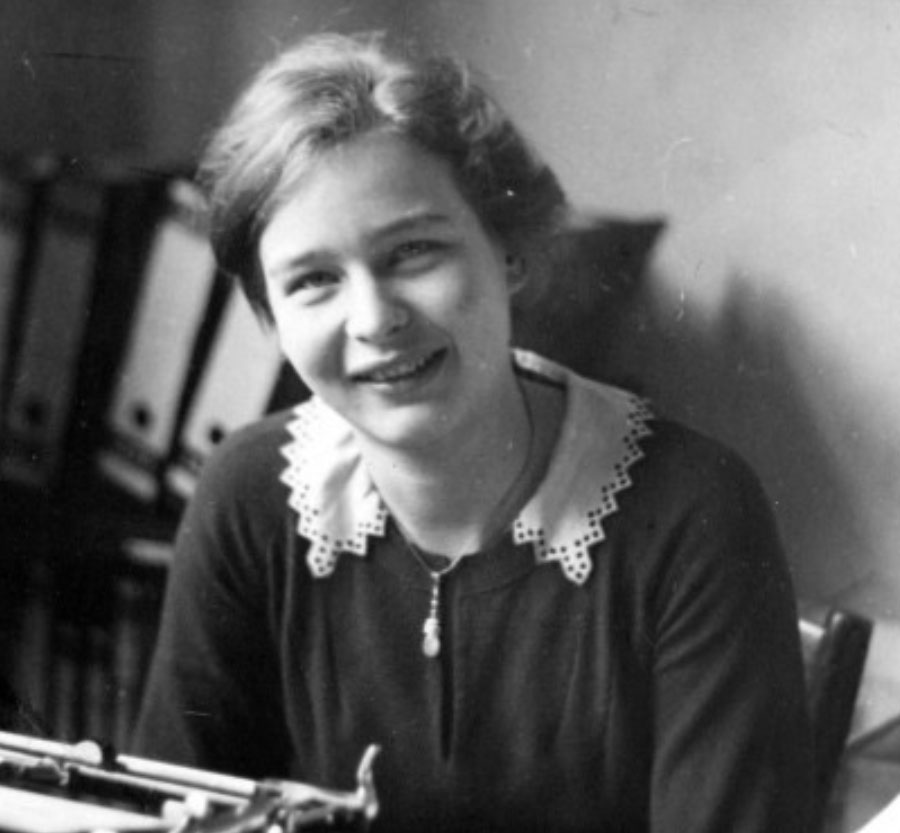
Libertas Haas-Heye spent her childhood on her grandfather Philipp Fürst’s estate in Eulenburg and Hertefeld near Berlin. After graduating from a girls„ high school in Zurich and spending a year in England, she began working as a press officer at Metro-Goldwyn-Mayer in Berlin in 1933. In the summer of 1934 she Harro Schulze-Boysen met the man she married in Liebenberg in March 1936. In early 1937 she Libertas Schulze-Boysen left the NSDAP, which she had joined in March 1933. She worked with Günther Weisenborn on a play called “Die guten Feinde„. In 1940 she writes film reviews for the “Essener Nationalzeitung" and at the same time collects material about NS crimes of violence in the German Cultural Film Center in the Reich Propaganda Ministry. She supports her husband in finding new connections within the resistance. At the end of October 1941 she receives the Soviet officer from Brussels who had come to Berlin to work for the military intelligence service and arranges a conversation with her husband. After his arrest she warns friends and creates illegal material. She Libertas Schulze-Boysen is arrested on September 8 and on the 19th. December 1942 sentenced to death by the Reichskriegsgericht and murdered three days later in Berlin-Plötzensee.
© Memorial to the German Resistance
- Alexander Spoerl dedicated his novel in 1950 Memoirs of an Average School Student Libertas Schulze-Boysen In Berlin-Lichtenberg, a street was named after the couple in 1972.
- The Libertas Chapel in Schloss Liebenberg, where she Harro Schulze-Boysen married, has been hosting an exhibition of the German Resistance Memorial since 2004 about her life and her resistance. In 2017, Stolpersteine for Libertas and Harro were placed in front of the Herrenhaus in Liebenberg.
- In addition, a Berlin memorial plaque commemorates her last residence at Altenburger Allee 19; the primary and secondary school in Löwenberg is named Libertas Schule.
- Libertas Schulze-Boysen Poems and Letters. Edited by Thora Eulenburg. Without Place 1952.
- Silke Kettelhake: „Tell everyone, everyone about me!” The beautiful short life of Libertas Schulze-Boysen. Munich 2008.
- Memorial to the German Resistance (Hrsg.): Libertas Schulze-Boysen and the Red Chapel. Catalogue to the exhibition at the Memorial to the German Resistance at Schloss & Gut Liebenberg. Berlin 2013.
- Johannes Tuchel: „…considering how young we are, one cannot believe in death.“ Liane Berkowitz, Friedrich Rehmer and the resistance actions of the Berlin Red Chapel. Berlin 2022.
Podcast Rote Kapelle. On a walk through Berlin, you will learn the story of the legendary resistance group. A project by Stefan Roloff, produced by the German Resistance Memorial and When 6 is 9 Productions GmbH. In German, English and Spanish.
On December 22, 1942, Libertas wrote a farewell letter to her mother – excerpt
My indescribably beloved mother!
Since I already live in a dream from which I am happy, I no longer have to wake up to a cruel reality. Words are hard for me. You are with me in my heart; oh, I wish I could take you with me completely to save you the pain I have overcome. It came quickly and unexpectedly, but the hours before the trial and now even more, were so long that I felt that there is no greater thing left… I remain young in your memories…. I no longer need to suffer. I may die, just as Christ died: for the people! I was able to experience even more than what humans are capable of. And—since no one dies before fulfilling their task—from the discord of nature, I could only achieve this great feat through this very death… I love the world; I have no hatred; I have the eternal spring! Don’t worry about things that maybe could have been done, for this and that – fate has demanded my death. I asked for it myself…… I asked as my last wish that you be given my „material“. Bury it when possible, in a beautiful place amidst the sunny nature… So, my darling, the hour is coming.
In infinite closeness and joy – all strength and all light…
Your child
Source: Wend Graf zu Eulenburg-Hertefeld: A castle in the Mark Brandenburg. Munich 1993.
„Tell everyone, everyone about me. Our death must be a beacon.“
Ardi Goldman Kunst-
und Kulturstiftung gGmbH
Uniongelände
Hanauer Landstraße 188, 60314 Frankfurt am Main