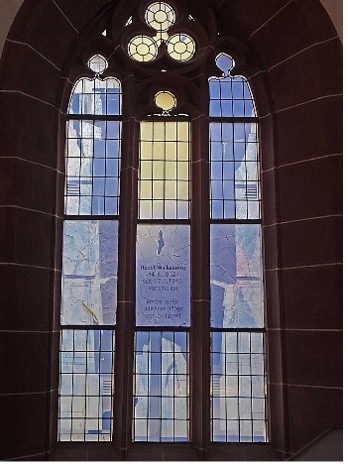
Wallenberg Raoul
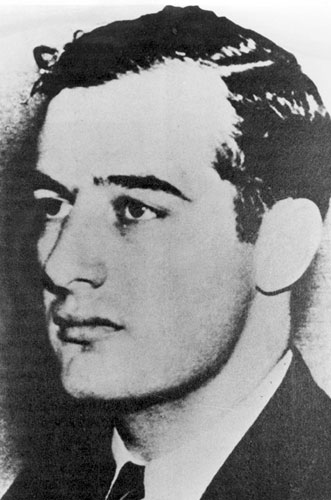
„Everyone wants to kill us. And then a non-Jew comes along. Rich, young. An aristocrat from Sweden. He does it without money, not for money. Simply to save people. And that was simply incredible for us.“ With these words, the Jew Klári Rajk describes the Swedish diplomat Raoul Wallenberg.
The young Swede traveled to occupied Hungary in the summer of 1944 and saved hundreds of thousands of Hungarian Jews from deportation and murder by the Nazis. After the end of the war in 1945, the Soviets took him captive. To this day, his fate remains unknown.
After the German troops invaded Hungary on March 19, 1944, Adolf Eichmann, the organizer of the mass murder, arrived in Budapest. The Hungarian government obediently followed all his orders: The Jews were evicted from their homes, expropriated, and crammed into ghettos. With the help of 25,000 Hungarian gendarmes, Eichmann organized the transports with cattle wagons to the Auschwitz death camp. Within 10 weeks, 435,000 Jews were deported. Most of them were murdered immediately upon arrival. About 200,000 Jews are still alive.
Diplomat Wallenberg arrives in Budapest in the summer of 1944 with a sophisticated plan: the exhibition of „protection passports“. The highly official-looking document, designed by Wallenberg himself, places the holder under the protection of the Swedish government. With the Hungarians, the Swede first negotiated the issuance of 800 protection passports, the production of which is monitored. But Wallenberg immediately organizes the secret printing of thousands of additional copies.
It is a matter of life and death. With his now around 300 employees, Wallenberg works tirelessly to complete the tasks. Neither the young Swede is intimidated by the Hungarian bureaucrats nor by the Hungarian-national socialist, especially brutal fighters of the Arrow Crossers. He unceasingly pursues his mission to save as many people as possible. The diplomat rents entire apartment blocks in which he houses over 30,000 Jews – neutral islands under a blue-and-yellow flag, with hospitals, kindergartens and food supplies. He builds an information service to explore the schedules of transports, death lists and any government plans. He even frees many at the train station, shortly before deportation, follows the death marches by car and retrieves thousands of victims. Adolf Eichmann is hindered by Wallenberg in his bloody work and threatens to get in the way; Wallenberg narrowly escapes a collision with a German truck. There are also setbacks. In Christmas 1944, Pfeilkreuzer attack a Jewish orphanage that is under Swedish protection. They shoot 78 children.
On January 13, 1945, the Red Army invades Budapest. With this, the danger of death for the Hungarian Jews is finally over. But the man who stood so bravely against the Nazis and saved over 100,000 people is himself lost. On January 17, 1945, Wallenberg makes his way nonchalantly to the headquarters of Soviet Marshal Rodion Malinowski in Debrecen. He is arrested and taken to Moscow. It is the day he is last seen alive.
© Stella Friedrichs: Without fear – Raoul Wallenberg. In: Ardi Goldman (Ed.): People like us. The 25hours Hotel – The Goldman Book. Production: brandbook.de, pp. 94 – 97. Frankfurt am Main, 2013.