Andreas-Friedrich Ruth
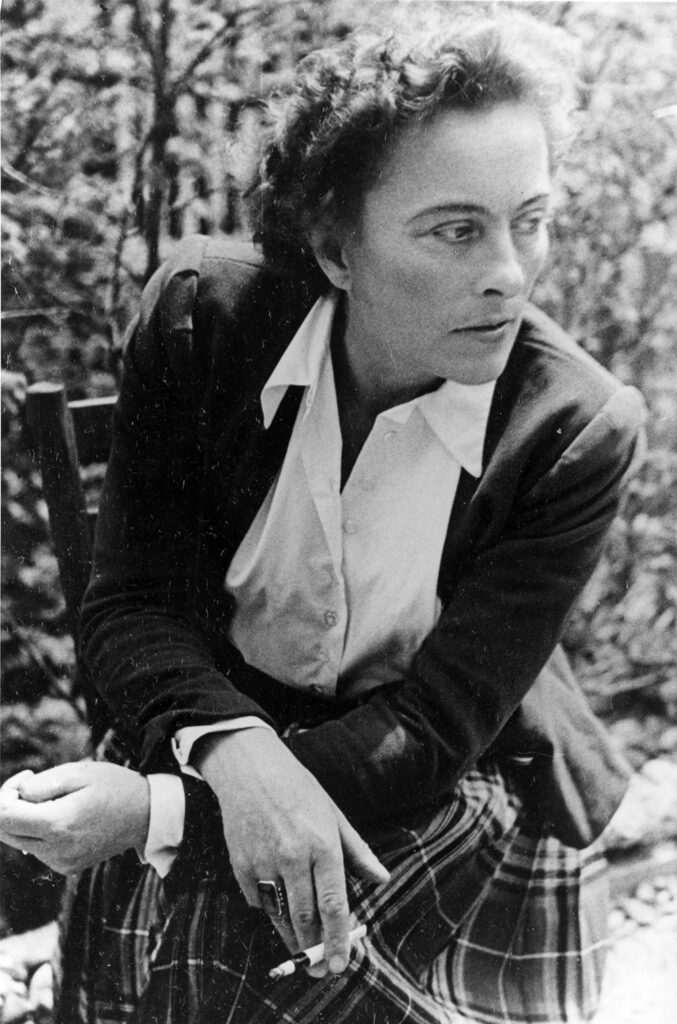
The Berlin journalist Ruth Andreas-Friedrich and her partner, the conductor, Leo Borchard were increasingly concerned about the increasingly brutal measures taken by the Nazi regime against the Jews. They helped Jewish acquaintances escape from Germany and took in friends in their Berlin apartment during the anti-Jewish pogrom in November 1938. Shortly thereafter, they met regularly with like-minded people to discuss help for persecuted victims. This group later became known as „Onkel Emil.“.
As more Berlin Jews went underground in 1942 to avoid deportation, Andreas-Friedrich and her friends supported many of them. They provided food stamps, food, and forged papers, and organized accommodations. In 1943, the network of helpers distributed copies of the last flyer of the Munich resistance group Weiße Rose in Berlin. On the night of April 18, 1945, they painted a clearly visible „NO“ on walls in the south of the city and later distributed numerous flyers that called for resistance against Hitler’s order to continue fighting.
© Memorial to the German Resistance
After the war, Ruth Andreas-Friedrich her commitment continued. She joined the SPD and published the women's magazine Lilith for a year. Later, she settled in Munich and worked there as a journalist and author. In 1952, she married, Walter Seitz a former member of her resistance group Onkel Emil.
Her life ended in September 1977 when she chose suicide. In her farewell letter she wrote that the right time had now come.
With her book Der Schattenmann, published in 1947, she left an impressive testimony of civil resistance against the Nazi dictatorship. Her courage and tireless dedication show how important it is to take responsibility and stand up for justice and solidarity with fellow human beings.