Uncle Emil
Hopefuls
Ground relief
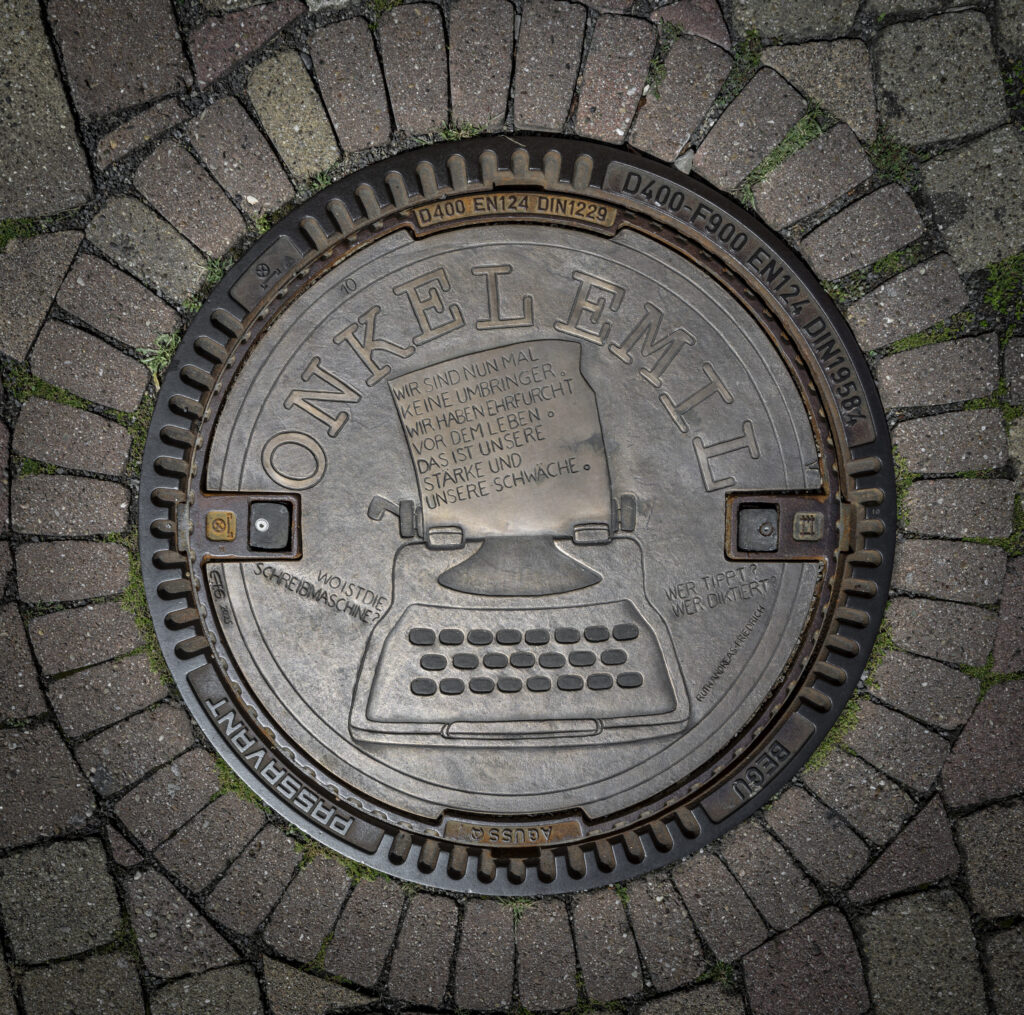
- Navigate to the location
We are not the kind of people who give up easily. We have a reverence for life. That is our strength – and our weakness.
„We are not conquerors after all. We have reverence for life. That is our strength – and our weakness.“
Ruth Andreas-Friedrich
Berlin, November 1938. As the windows of Jewish businesses are shattered on the streets, synagogues burn, and the persecution escalates openly, people gather in a house in Berlin-Steglitz who refuse to look away. They act – spontaneously, out of conviction. And they form what would later be known under the warning call „Onkel Emil!“: a resistance group without party affiliation, but with courage and determination.
Help in secret
The group is formed around the journalist Ruth Andreas-Friedrich and the conductor. Leo Borchard Their motivation is not ideological, but deeply human: they want to help those who have been persecuted. What begins with a few friends who are rescued soon develops into a vital network of survival.
- They provide food cards, medicines, and safe hiding places.
- They forge documents, provide work, and organize escape routes.
- And they risk their own lives to save the lives of others.
A key member is the printer Ludwig Lichtwitz, who skillfully produces identification cards and documents. Prison pastors Harald Poelchau and the doctor also secretly Walter Seitz support the work – whether with information or medical help.
Signs of resistance
In 1943, „Onkel Emil“ spread the last leaflet of the White Rose in Berlin – an act of solidarity with the students murdered in Munich. And in the final days of the war, on April 18, 1945, the word „NO“ appeared on Berlin’s walls – written in chalk but unmistakable: a symbolic act of resistance just before the collapse of the Nazi regime.
Uncovered until the very end
Despite contacts with other resistance groups such as the Red Chapel and the Kreisau Circle, „Onkel Emil“ remained undetected until the end of the war. Without military means, but with a clear moral compass and silent determination, the participants managed to save numerous Jewish lives.
Memory and legacy
Today, „Uncle Emil“ stands for invisible but effective resistance – beyond the headlines but with great impact. Her example shows: Civil courage begins in the small things. In everyday life. And it makes a difference.
Sources Ruth Andreas-Friedrich: The Shadow Man. Diary entries from 1938–1948. Berlin 2000.
Susanne Gretter: – Ruth Andreas-Friedrich Biography, 17.09.2022.
In July 2021, the green space behind the Forum Steglitz in Berlin was given the name Onkel-Emil-Park.
- Ruth Andreas-Friedrich The Shadow Man. Diary Records 1938-1945. First publication Hamburg 1947.
- Karin Friedrich Time Flecks. The Biography of a Family. Munich 2000.
- Matthias Sträßner: The conductor who did not play. Leo Borchard 1899-1945. Berlin 2017.
- Wolfgang Benz: Protest and humanity. The resistance group „Onkel Emil“ in National Socialism.
Ditzingen 2020.
- Local History on Instagram: Onkel Emil & Kreisauer Kreis – Berlin. YouTube.
- The group „Onkel Emil“ is a thematic component of the traveling exhibition about the White Rose, which is offered for loan in ten languages by the White Rose Foundation.
Almut Finck: When the diary was Ruth Andreas-Friedrich published. Calendar page from 06.07.1947.
Deutschlandfunk Archive, 06.07.2022.
„We are not conquerors after all. We have reverence for life. That is our strength – and our weakness.“
Ardi Goldman Kunst-
und Kulturstiftung gGmbH
Uniongelände
Hanauer Landstraße 188, 60314 Frankfurt am Main