Kuckhoff Greta
Hopefuls
–
PORTRAIT
- Navigate to the location
A resistance network that never called itself that.
Personal example of:
–
·
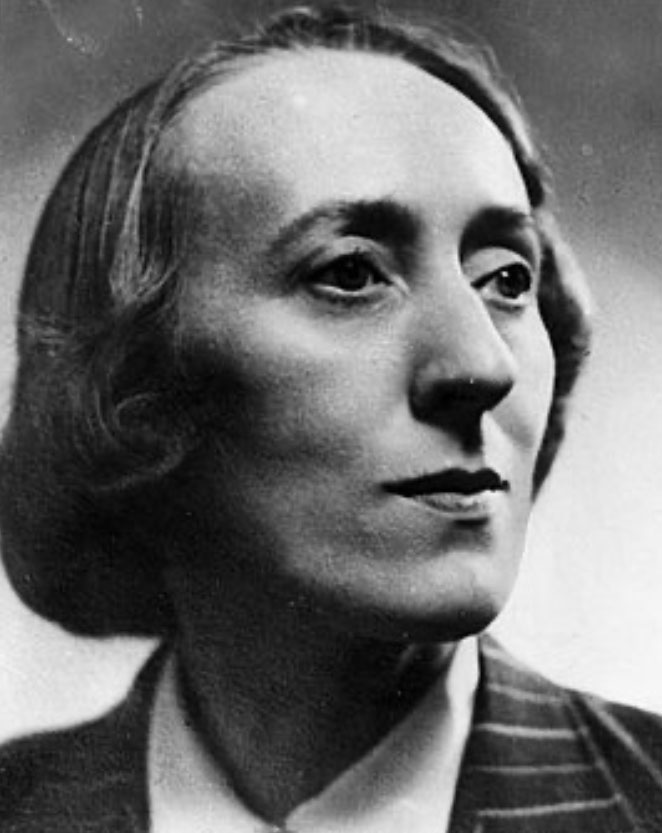
„Our fingerprints were taken. Then we took portraits. I didn’t have to be told to hold my chin up – that was just a bad habit of mine anyway. I don’t know if they wanted to practice race studies with our heads or what they needed the starkly detailed front and left and right side photos for anyway. … It happened in a degrading way. They were tugging at my ear, I don’t have a hanging earlobe; they seemed to take it as confirmation of some theory.„
Greta Kuckhoff From the Rosary to the Red Chapel. Berlin 1978, pp. 334 – 335
Born in Frankfurt am Oder as the daughter of a musical instrument maker, Greta Lorke passed the teacher's exam in 1924 and subsequently studied economics and sociology in Berlin and Würzburg. After lengthy periods abroad, she continued her sociology studies at the University of Wisconsin in the USA between 1927 and 1929 and worked as a language teacher and translator after returning from the United States. After working as a scientific secretary at the Institute for Social Research in Frankfurt am Main under Karl Mannheim in the early 1930s, she worked as a freelance translator until 1942. Greta Lorke has been living Adam Kuckhoff together with her partner since 1935, whom she married in 1937. A year later, their son Ule was born. Adam and Greta Kuckhoff belong to the circle of friends and acquaintances of Mildred and Greta Arvid Harnack, whom Greta met during her studies in the United States. In 1940, the Kuckhoff couple introduced them to Harro and . They Libertas Schulze-Boysen Adam Kuckhoff have connections to the Social Democratic resistance and worked on several Flugschriften der Roten Kapelle in 1941/42. In June 1941, the Kuckhoff couple kept a radio for the resistance group. He Adam Kuckhoff was arrested in Prague on September 12, sentenced to death on February 3, 1943, and on May 5, 1944, he was executed. Murdered in Berlin-Plötzensee in August 1943. Greta Kuckhoff He was sentenced to ten years in prison and was freed from the Waldheim prison by the Red Army in May 1945.
© Memorial to the German Resistance
After her return to Berlin, Greta Kuckhoff she joined the KPD. She took over the management of the office for de-nazified and homeless businesses in Berlin. Together with other members of the Red Chapel, she fought repeatedly to bring former General Judge Dr. Manfred Roeder to trial.
In 1946 she became deputy head of the nutrition department at the Berlin City Council. There she was strongly committed to equal opportunities for women in leadership positions. But the harassment by the Western Allies left her restless – Kuckhoff moved to the East of Berlin.
In 1950 she took on two key positions at once: Head of Department at the GDR Ministry of Foreign Affairs and President of the German Central Bank. Eight years later, after conflicts with the SED leadership, she resigned.
However, she did not disappear entirely from public view: as a long-time vice president of the German Peace Council, she worked to develop German-British relations.
Sources: Women in Resistance: Greta Kuchhoff. Geschichtsforum, online; Greta Kuckhoff: From the Rosary to the Red Chapel. Berlin 1978.
- Greta Kuckhoff She was awarded numerous honors: in 1955 she received the Clara Zetkin Medal and the Silver Order of Patriotic Merit, and in 1958 the Medal for Fighters Against Fascism.
- This was followed by the Gold Patriotic Merit Order (1965), the Carl-von-Ossietzky Medal of the Peace Council of the GDR (1968), the Silver Star of the Friendship of Peoples (1968) and Gold (1972), as well as in 1970 the honorary ribbon for the Patriotic Merit Order in Gold. Other honors included the honorary citizenship of the city of Frankfurt am Oder in 1967, the honorary doctorate degree from the Martin-Luther-University Wittenberg in 1973, the Thomasius plaque from the University of Halle-Wittenberg in 1977 and the Karl Marx Order in 1980.
- Her name also lives on in street names: Kuckhoffstraße in Berlin-Niederschönhausen commemorates her and her husband Adam; there are other Kuckhoff streets in Leipzig and Lützen, as well as a Kuckhoffplatz in Magdeburg.
- Greta Kuckhoff From the Rosary to the Red Chapel. Berlin 1978.
- Griebel, Regina/Coburger, Marlies/Scheel, Heinrich: Recorded? The Gestapo Album on the Red Chapel. A photographic documentation, Halle 1992.
- Johannes Tuchel: „…considering how young we are, one cannot believe in death.“ Liane Berkowitz, Friedrich Rehmer and the resistance actions of the Berlin Red Chapel. Berlin 2022.
From Adam Kuckhoff the prison to his wife Greta
Plötzensee, November 23, 1942
My Greta!
I am with you with all my thoughts and with all my heart. I saw a
Moment Your narrow-eyed, lovely face has hurt me so much. Make your heart strong and let us carry whatever comes our way together, as we have carried everything together: together and each for ourselves together. I saw our little one. How much I love him and how I believe in his future: Thank you for giving him to me, you poor love, you!
I kiss you.
Your A.
Source: (Greta Kuckhoff Ed.): Adam Kuckhoff In Memory. Berlin 1946.
„Our fingerprints were taken. Then we took portraits. I didn’t have to be told to hold my chin up – that was just a bad habit of mine anyway. I don’t know if they wanted to practice race studies with our heads or what they needed the starkly detailed front and left and right side photos for anyway. … It happened in a degrading way. They were tugging at my ear, I don’t have a hanging earlobe; they seemed to take it as confirmation of some theory.„
Ardi Goldman Kunst-
und Kulturstiftung gGmbH
Uniongelände
Hanauer Landstraße 188, 60314 Frankfurt am Main