Prior Golem, 2013-2024
The Art Walk
Golem, 2013-2024
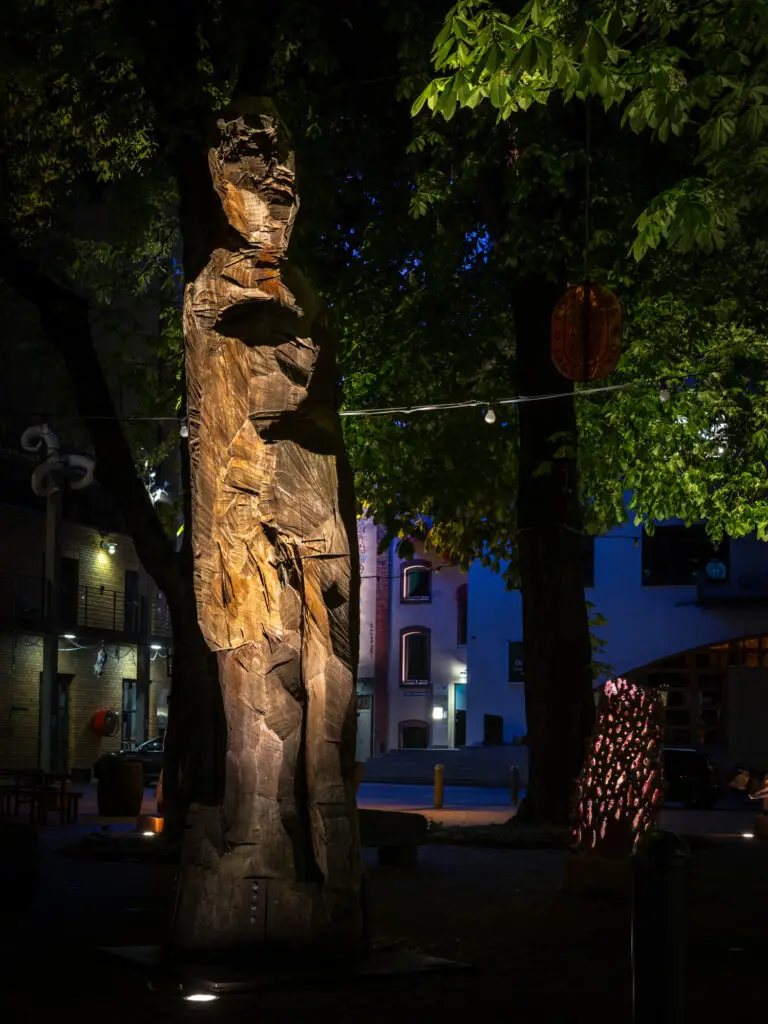
Every material is a challenge, whether it is a six-metre-tall tree trunk or a piece of paper.
EDUCATION
- Navigate to the location
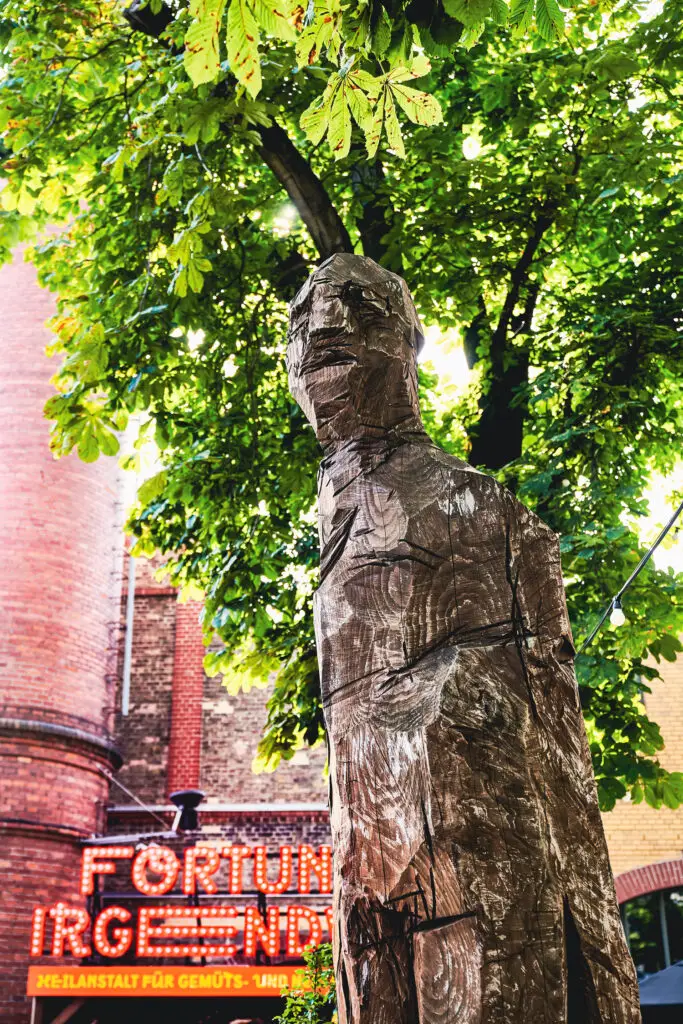
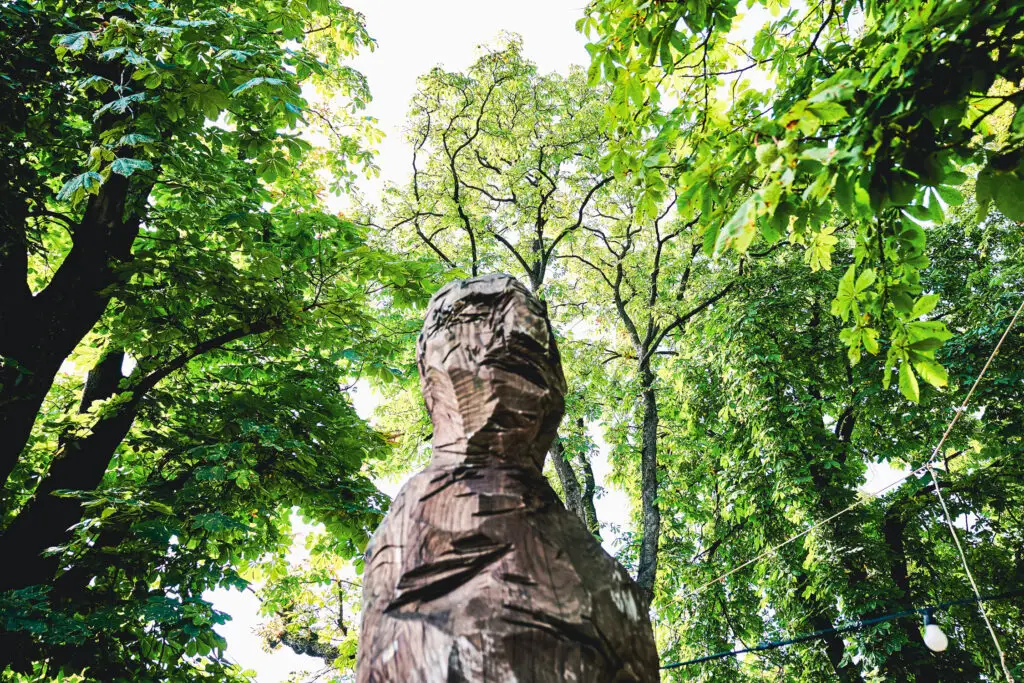

A Closer Look at the Work
Der Künstler Prior hat einen Golem erschaffen, obgleich der Schöpfer, wie es der Legende nach der Fall zu sein hätte, keineswegs nah zu Gott ist. Prior, ganz und gar säkular, kommt wohlweislich ohne Gott aus. Er hat aber ein Wesen geschaffen, das in seiner Mehrdeutigkeit dem Menschen beistehen kann. Der Mensch braucht Beistand gegen die unter ihm weilenden Menschenfeinde.
Nach der Golem-Legende erschaffen weise und gelehrte Rabbis die Figur aus Lehm. Sie hauchen ihr Leben ein. Golem soll die Juden vor der drohenden Vernichtung retten. Im vergangenen Jahrhundert freilich fehlte Golem. Er war nicht da und wurde auch von niemandem erschaffen, um die Juden Europas vor der Katastrophe zu bewahren.
Für Prior hat der Golem eine universelle Bedeutung. Vom Menschen erschaffen ist er eine Zwitterfigur. Er steht für das Rätsel, das der Mensch sich selbst ist. Mit Stanisław Lem weiß Prior, dass der Mensch ein Zufallsprodukt ist. Nichts Teleologisches eignet ihm, er ist auf keinen Zweck hin entstanden. Zufällig ist die Welt und auch der Mensch in ihr. Diese ganz und gar weltliche Sicht auf die Existenz des Menschen hebt aber seine Eigenverantwortung hervor. Wenn alles Menschenwerk ist, wenn alles in unseren Händen liegt, dann ist der Mensch das Subjekt der Geschichte. Ein Ausweg, in welche Sphäre auch immer, ist versperrt. Alle Transzendenz ist ausgeschlossen.
Ist der Mensch Menschenwerk, dann schafft der Menschenbildner Prior in seinem vor rund zehn Jahren entstandenen Golem ein Wesen, das uns Wächter und Retter, Helfer und Beschützer, aber auch Monster und Bösewicht sein kann.
Was der von Menschen erschaffene Golem uns ist, entscheidet einzig der Mensch. Ob er ihm zum Wohle oder zum Verderben gereicht, liegt in seiner, des Menschen Hand.
About the Artist
Klaus Prior’s artistic work takes shape without preparatory sketches or models. Depending on their size, his sculptures and works on canvas and paper are often completed in a single, concentrated session. Spontaneity and condensation define the process. Through a form of psychic automatism, Prior gives visual expression to his state of mind at that moment. The works reflect raw, intuitive sensations and immediate emotional states.
Using spontaneously chosen colours, impulsive gestures and swiftly applied brushstrokes, the artist develops the silhouettes of his motifs out of an inner necessity. Crossing the boundaries of form, deliberately exaggerating heads, faces, limbs and gestures, and leaving the traces of the working process visible are central stylistic devices. They embody the expression of the moment and give the works their compelling presence.
As a sculptor, Prior works primarily with wood, one of the oldest artistic materials. His iron sculptures also originate in wooden works. He consistently avoids narrative contexts, attributes and representational references that might place his figures within particular stories. The figures stand on their own: existential, vulnerable and isolated.
Prior’s art is deeply shaped by his childhood and youth in post-war Germany, by his awareness of the human condition and its fragility, and by the lived realities of an industrial working-class culture shaped by many nationalities. His paintings and sculptures explore pain, injury and isolation as recurring conditions of human existence.
As a member of the generation born after the perpetrators, Prior rejected their repression of the past and refusal to acknowledge guilt. He avoided conscription in West Germany during the economic miracle by emigrating to Switzerland. From there, he followed the Auschwitz trial in Frankfurt am Main closely and, although he bore no personal guilt, engaged deeply with Germany’s crimes against humanity.
This historical awareness and his engagement with philosophy after Auschwitz underpin his thinking and creative work. Prior’s oeuvre expresses an existential struggle with memory, responsibility and the fragile dignity of human beings.
Photos: © Stefan Gröpper Photography / Daniel Woeller
Ardi Goldman Kunst-
und Kulturstiftung gGmbH
Uniongelände
Hanauer Landstraße 188, 60314 Frankfurt am Main