Prior Golem, 2013-2024
The Art Walk
Golem, 2013-2024
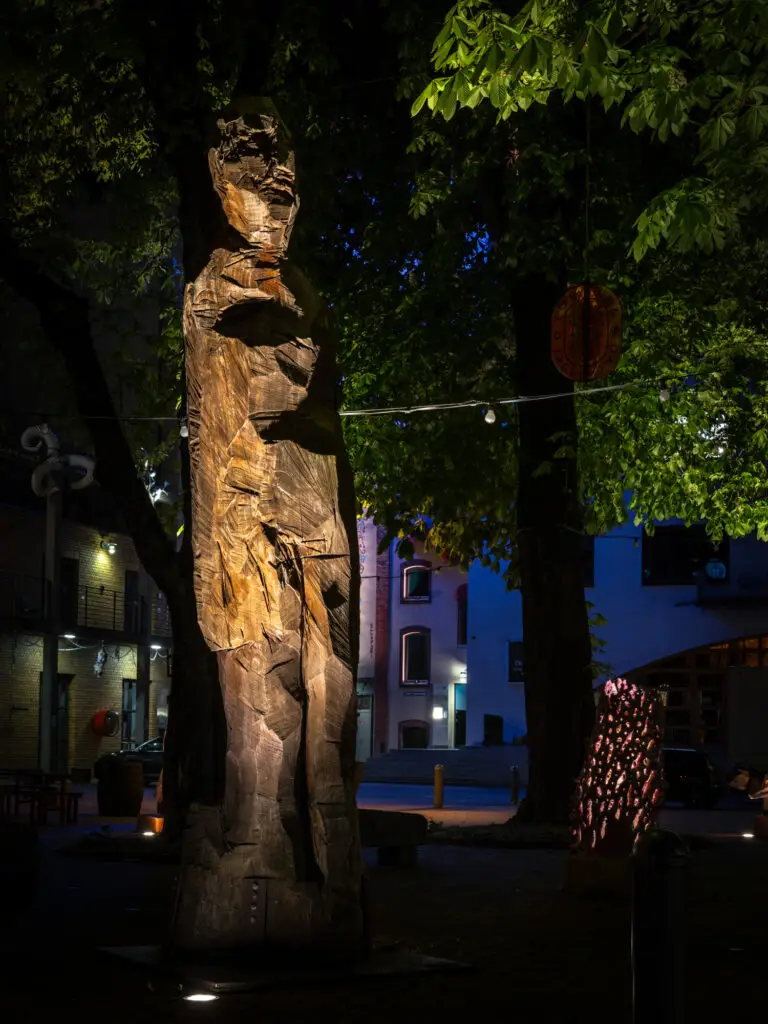
Every material is a challenge, whether it is a six-metre-tall tree trunk or a piece of paper.
EDUCATION
- Navigate to the location
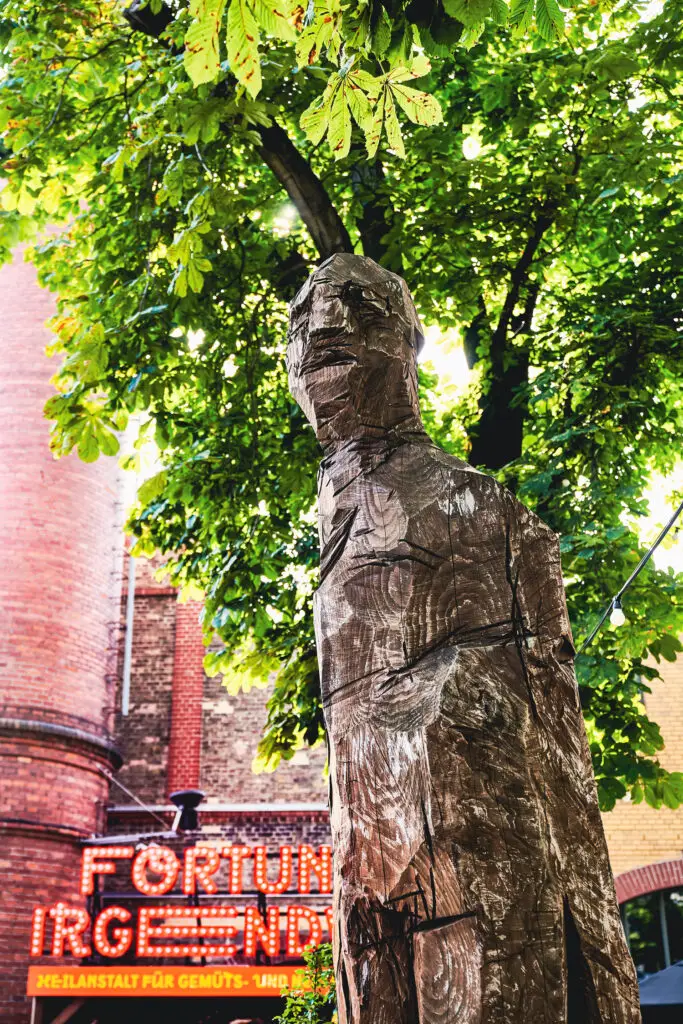
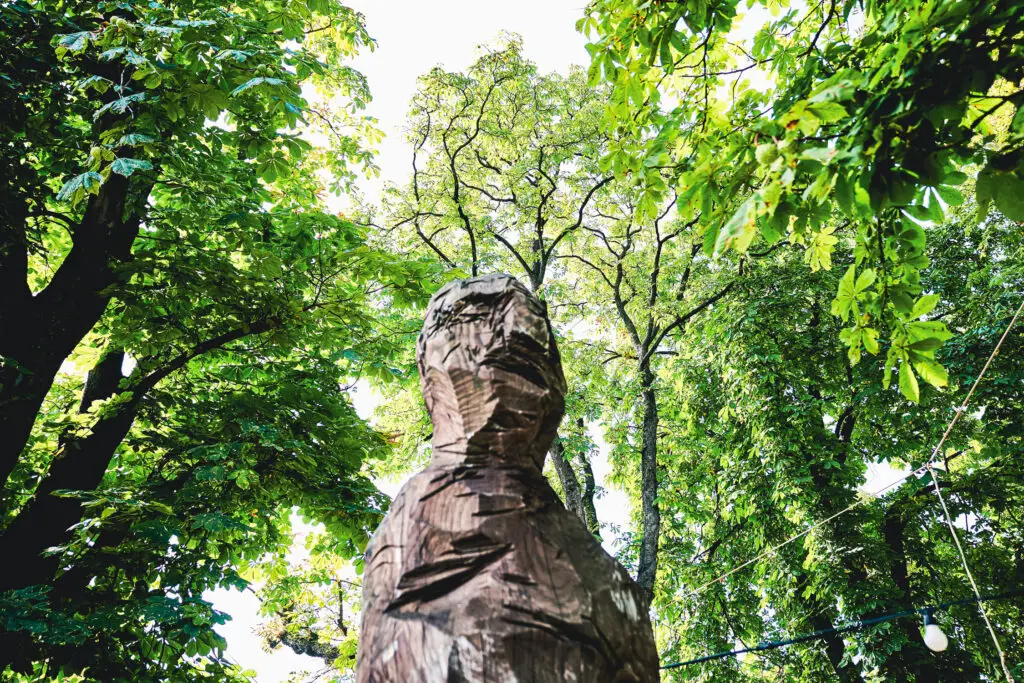

A Closer Look at the Work
The artist Prior has created a Golem, although the creator, according to legend, should not be close to God at all. Prior, completely secular, fortunately does not need God. However, he has created a being that, in its ambiguity, can stand alongside humans. Humans need help against the human enemies that exist beneath them.
According to the Golem legend, wise and learned rabbis created the figure from clay. They breathed life into it. Golem is said to have saved the Jews from imminent destruction. In the last century, however, Golem was absent. He was not there and was not created by anyone to save the Jews of Europe from catastrophe.
For Prior, the Golem has a universal meaning. Created by humans, it is a hybrid figure. It stands for the enigma that humans are themselves. With Stanisław Lem, Prior knows that humans are a product of chance. Nothing teleological qualifies them; they did not come into being for any purpose. The world and the human being in it are entirely accidental. This entirely secular view of human existence nevertheless highlights his own responsibility. If everything is the work of man, if everything lies in our hands, then man is the subject of history. Any escape into another sphere is blocked. All transcendence is excluded.
If man is a work of art, then the creator of human beings creates a being in his Golem, created about ten years ago, who can be our guardians and saviors, helpers and protectors, but also monsters and villains.
What the man-made Golem is to us is determined solely by the human being. Whether he uses it for good or for evil lies in his, the human being's, hand.
About the Artist
Klaus Prior’s artistic work takes shape without preparatory sketches or models. Depending on their size, his sculptures and works on canvas and paper are often completed in a single, concentrated session. Spontaneity and condensation define the process. Through a form of psychic automatism, Prior gives visual expression to his state of mind at that moment. The works reflect raw, intuitive sensations and immediate emotional states.
Using spontaneously chosen colours, impulsive gestures and swiftly applied brushstrokes, the artist develops the silhouettes of his motifs out of an inner necessity. Crossing the boundaries of form, deliberately exaggerating heads, faces, limbs and gestures, and leaving the traces of the working process visible are central stylistic devices. They embody the expression of the moment and give the works their compelling presence.
As a sculptor, Prior works primarily with wood, one of the oldest artistic materials. His iron sculptures also originate in wooden works. He consistently avoids narrative contexts, attributes and representational references that might place his figures within particular stories. The figures stand on their own: existential, vulnerable and isolated.
Prior’s art is deeply shaped by his childhood and youth in post-war Germany, by his awareness of the human condition and its fragility, and by the lived realities of an industrial working-class culture shaped by many nationalities. His paintings and sculptures explore pain, injury and isolation as recurring conditions of human existence.
As a member of the generation born after the perpetrators, Prior rejected their repression of the past and refusal to acknowledge guilt. He avoided conscription in West Germany during the economic miracle by emigrating to Switzerland. From there, he followed the Auschwitz trial in Frankfurt am Main closely and, although he bore no personal guilt, engaged deeply with Germany’s crimes against humanity.
This historical awareness and his engagement with philosophy after Auschwitz underpin his thinking and creative work. Prior’s oeuvre expresses an existential struggle with memory, responsibility and the fragile dignity of human beings.
Photos: © Stefan Gröpper Photography / Daniel Woeller
Ardi Goldman Kunst-
und Kulturstiftung gGmbH
Uniongelände
Hanauer Landstraße 188, 60314 Frankfurt am Main