ADA 62 R.M. (series), 2023
The Art Walk
62 R.M. (series), 2023
An important reference point in my work is the philosopher Ludger Schwarte. In his text Philosophy of Architecture, he captures what I am dealing with in my work: actions are fleeting and only become worldly facts when they are perceived, remembered, and ultimately materialised. Other people react to these actions collectively with their senses and their memory, but also the things themselves: they record actions, store them, and continue to transform them.
EDUCATION
M.A. Fine Arts, Chelsea College of Art and Design, London
Grants, awards, recognition
- Navigate to the location
About the Artist
ADA – 62 R.M. (series)
ADA pursues an interdisciplinary practice; the artist moves between installation, analog photography, performance, and film. Born in Kazakhstan to a Korean father and an Ukrainian mother, currently living between London and Paris, she is committed to mediating a transcultural perspective. In doing so, she does not depart from political and cultural dimensions in the classical sense; rather, she examines the fragile boundaries between reality and imagination, between material presence and emotional depth.
The central focus of their artistic experiments is the dimension of scenography:
the play with space, light, the staging of characters, and the visual design as a kind of alchemy of the media, as well as the exploration of the fragment – not as a ruin in the romantic sense, but as an active repository of experience.
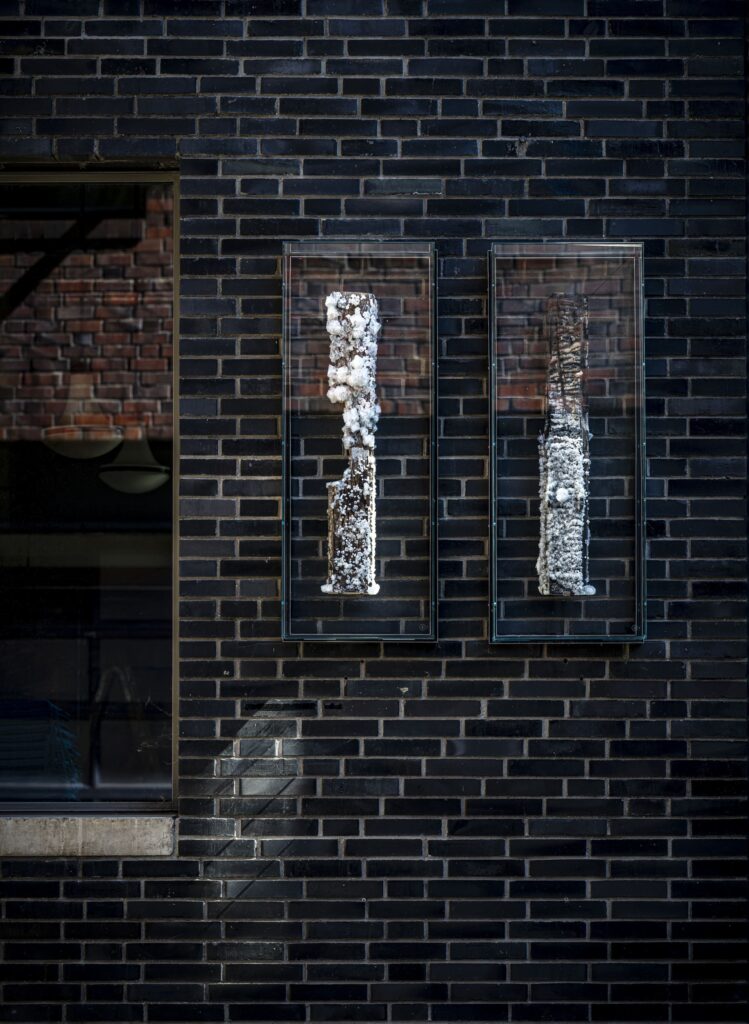
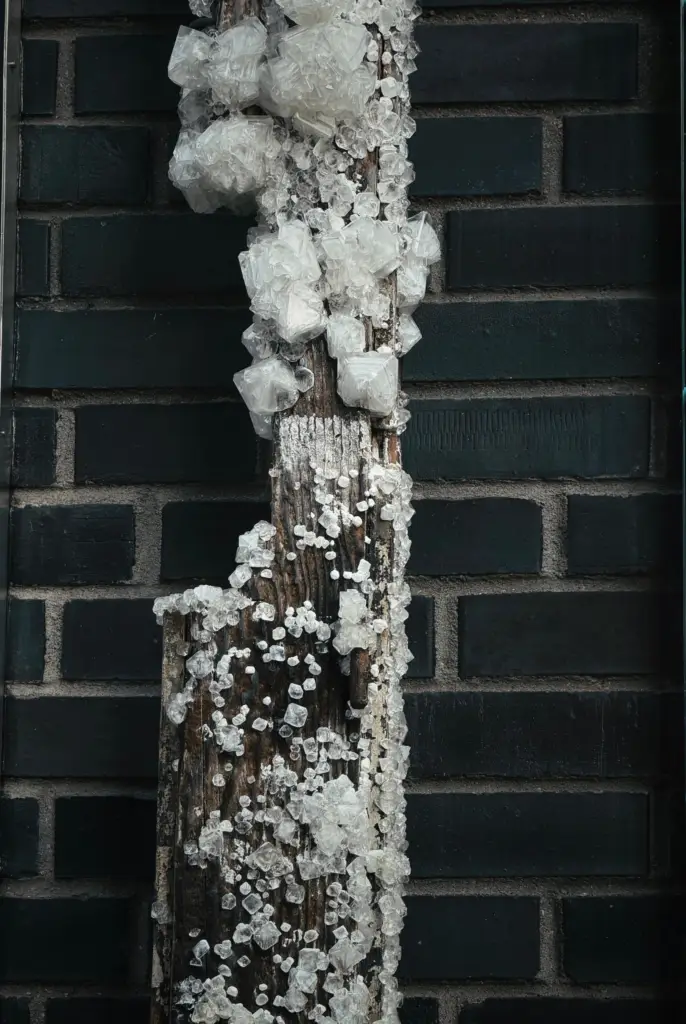
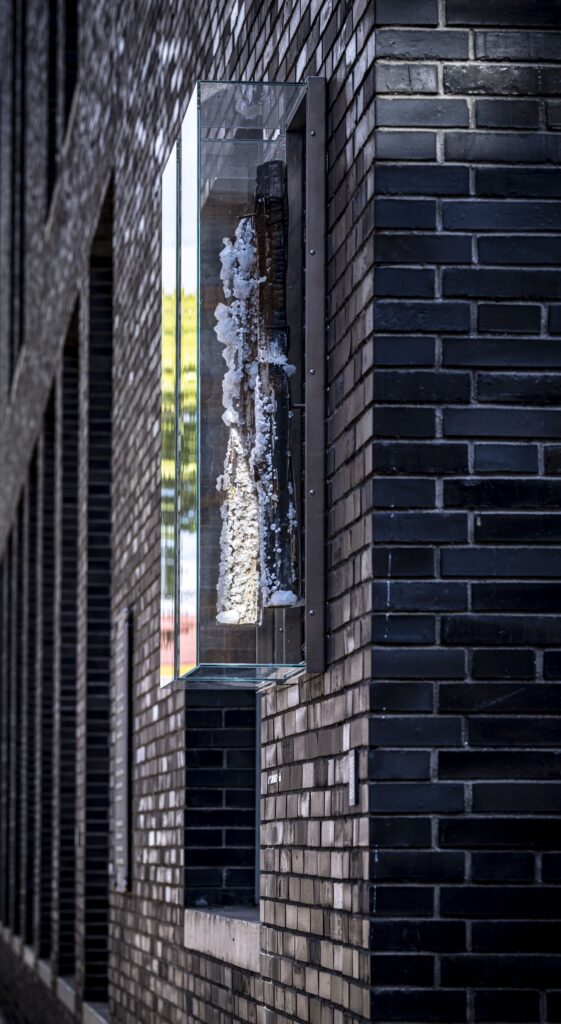
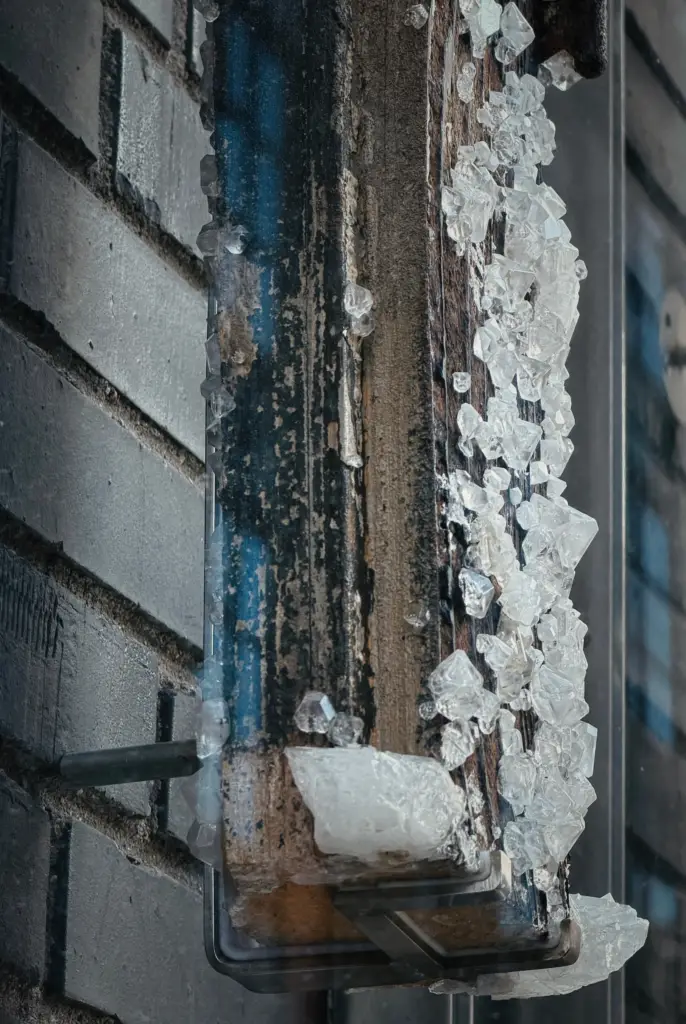
The artist often uses found objects such as bricks, mortar, metal strips, and broken ornaments. Also, the two burned, charred wooden pieces on the Union area, which originate from the series „62 R.M.“ are, as so often, pre-existing objects from an abandoned building in Venice that ADA rescued.
In a process-oriented, almost ritualistic approach, the artist transforms these finds, separating them from their original context and transforming them into a new, crystalline form. This transformation is neither nostalgic nor restoration-oriented; rather, it aims to make visible tensions: between nature and artificiality, decay and preservation, present and absence.
Their artistic interventions recall a neo-archaeological practice, similar to how in Gordon Matta Clark’s anarchotechnical interventions, gaps, cracks, and absences themselves become carriers of meaning. ADA does this in a very subtle way: they approach the abandoned places with intuition, listen to their silent language, follow invisible paths to give the works multi-layered levels of meaning. Through the artistic intervention, the fragment becomes the focal point of memory, or as Walter Benjamin formulated it: a dialectical image in which a spark of historical truth bursts forth.
Crystallization plays a central role in this process, not as a decorative effect but as a disruptive form of knowledge. It does not freeze, but makes the material tangible: the weight of the material, the traces of use, the dust of past lives. In works where ADA combines real objects with their photographic representations, such as in installation diptychs, a tension arises: what carries the memory—the object or its image? The stone or its reflection?
What ADA creates is a poetics of presence, an invitation to the audience to enter those spaces where memory reshapes itself: between decay and recurrence, between fragment and new form. In a world that too quickly erases the old, ADA resists the logic of forgetting, not through preservation in the museum sense, but by transforming matter into sensory experience. Its fragments are not only preserved; they are transsubstantiated, newly charged with meaning, open to what may yet come.
Photos: © Stefan Gröpper Photography, Marie Ruck
Ardi Goldman Kunst-
und Kulturstiftung gGmbH
Uniongelände
Hanauer Landstraße 188, 60314 Frankfurt am Main