Mia Vanity, 2024
The Art Walk
Vanity, 2024
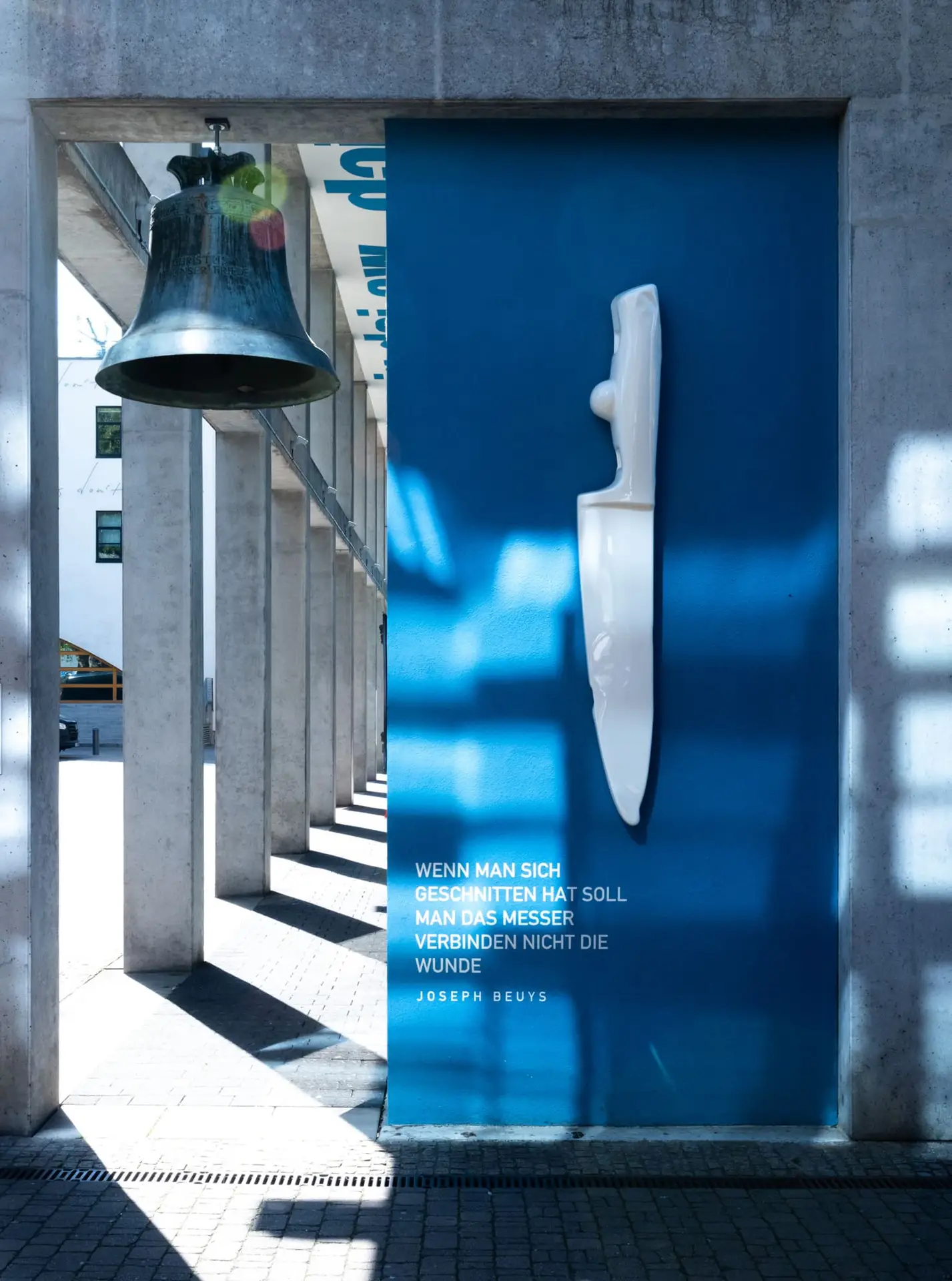
By following the handling instructions, you can safely use and maintain your knife for efficient and risk-free cutting.
EDUCATION
Erasmus exchange program, Villa Arson, Nice
Foundation Diploma, Camberwell College of Arts, London
Grants, awards, recognition
2025 3rd International Sculpture Symposium, Artist Residence, Darmstadt
- Navigate to the location
A Closer Look at the Work
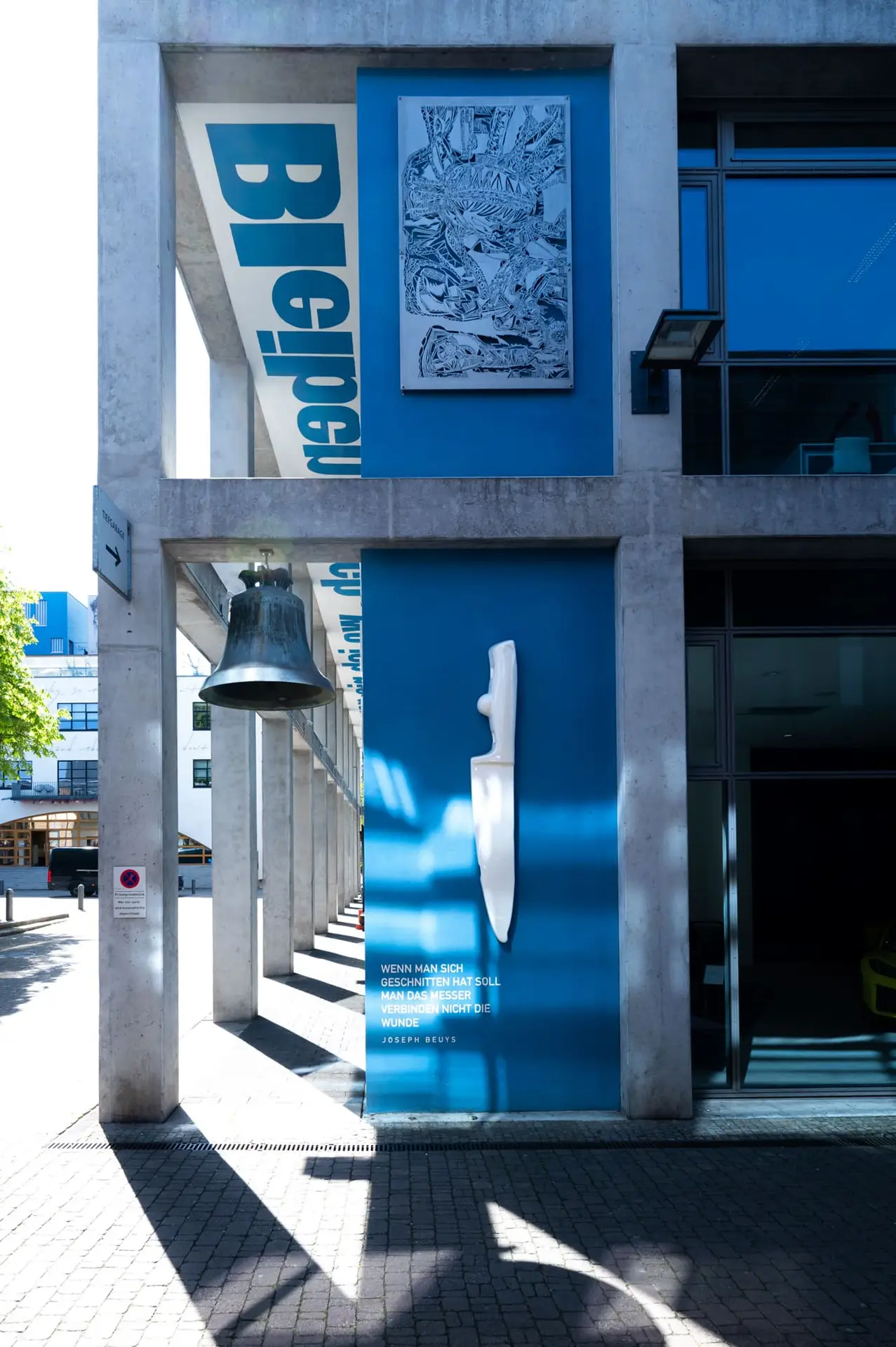
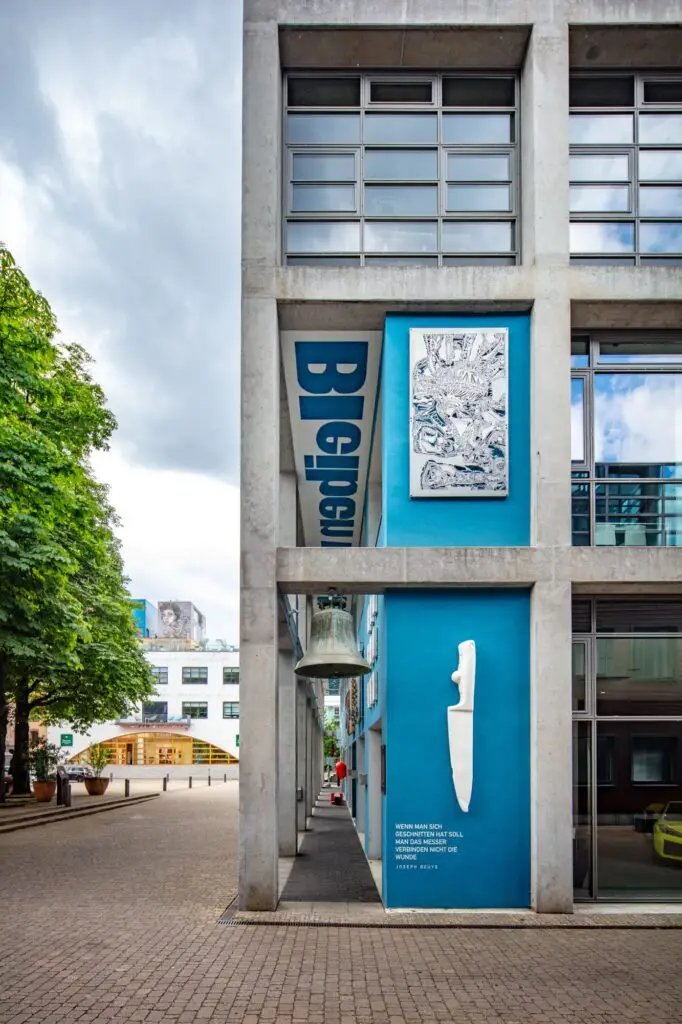
Ambivalences and the multifaceted entanglements of our present time manifest themselves in the Union area in manifold ways, as well as in Vanity. The title itself plays with levels of meaning in two ways:
Firstly, it refers to vanity on vanity, surface, and external staging. On the other hand, the artistic-historical Vanitas theme resonates within it, which reminds us of transience, vulnerability, and the search for meaning. In this tension between the profane and the symbolic, S Julie Mia’s work unfolds as a reflection on social dynamics, perception, and responsibility.
Hardly any object is as closely linked to the cultural history of humanity as the knife. In art, especially in the present, it functions as a highly charged symbol. It often stands for violence, whether physical, structural, or psychological, and thus refers to social and individual vulnerability. As a tool of transformation, it can cut, open, or rearrange, thus becoming a symbol of artistic processes and societal change. At the same time, the knife symbolizes demarcation. It marks territories, protects identities, sets signs and incisions in an often chaotic world.
Several artists of the 20th century made the wound, whether physical or psychological, the leitmotif of their work. This also applies to the German sculptor Joseph Beuys. Given the existential wounds caused by war, displacement, and the plight of the post-war era, it is not surprising that the human wound became a central theme of post-war art. While the bandaging as a wound healing agent seems familiar in relation to the human body, it appears initially irritating when associated with an object, such as a knife.
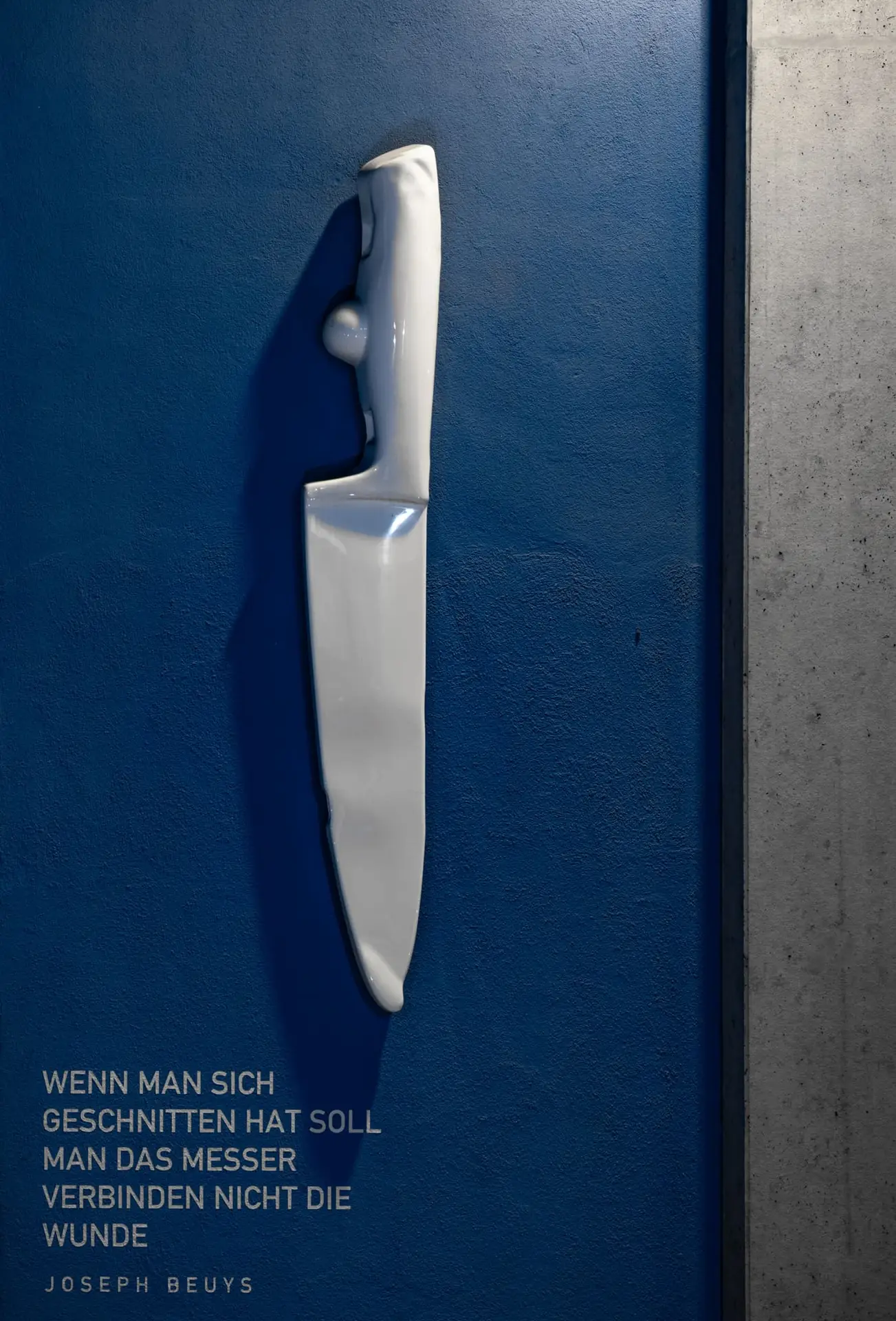
„If you have cut yourself, you should connect the knife and not the wound.“ – this paradoxical aphorism of Beuys was deliberately chosen for the Union and confronts us with exactly this irritation. The paradox dissolves when it is read as a figurative call to not only treat the symptoms but also the causes. Yet even then, the idea of a bleeding wound and a related blade remains a provocative metaphor that raises deeper questions about responsibility, action, and healing.
Vanity This dimension is taken up without explicitly intending or illustrating it. The knife is not a tool that was used, but appears here as an iconized object, enlarged, transformed, and abstracted. The PETG relief, created from the wax impression of a kitchen knife packaging, eschews any functional use through its shape and presentation. In its shiny surface, created by layers of white and clear automotive paint, it recalls votive offerings, as a sign of gratitude or supplication, ritually and representatively.
Although neither blade nor wound are visible, the power of the work lies precisely in this empty space. Vanity is a catalyst. An invitation to reflect on power relations, scope for action, and the view behind the shiny surface.
About the Artist
The artist Julie Mia (*1988 in Offenbach am Main) plays with scale effects – in striking contrast to the speed of the present era, her works emerge over a period of several years. She studied at Chelsea College of Art in London with Martin Newth, at Camberwell College of Arts in London, and at Villa Arson in Nice with Pascal Pinaud. She is the recipient of the Clyde & Co Art Award and has been an assistant to Céline, Heiner and Aeneas Bastian since 2017.
Photos: © Stefan Gröpper Photography
Ardi Goldman Kunst-
und Kulturstiftung gGmbH
Uniongelände
Hanauer Landstraße 188, 60314 Frankfurt am Main