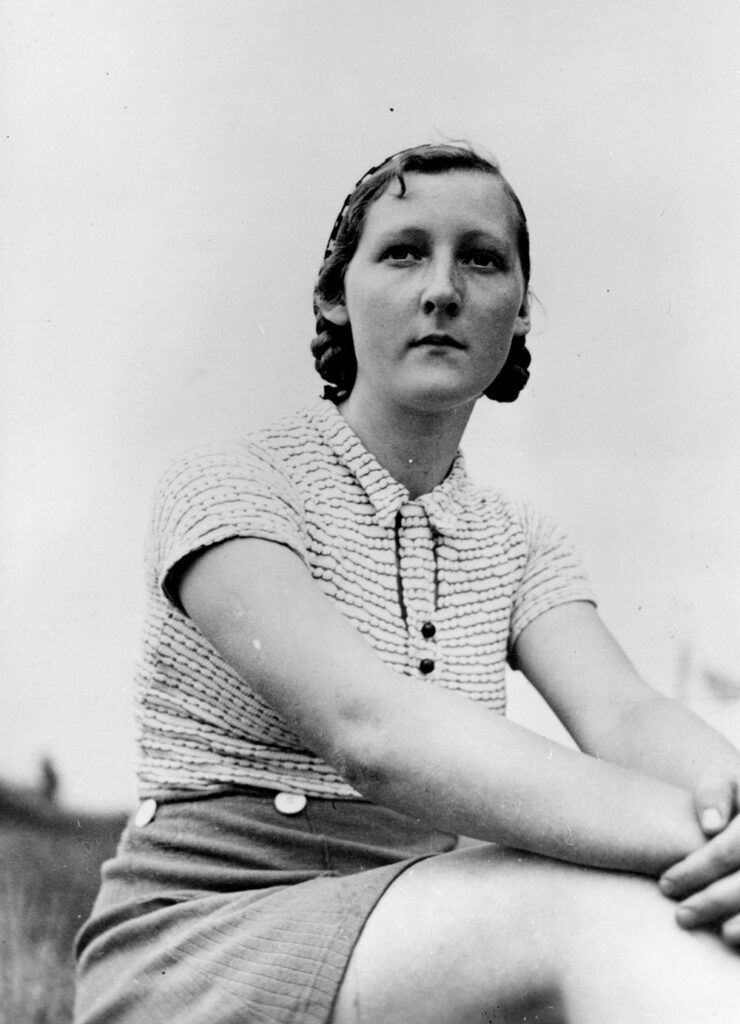
Bontjes van Beek
Hopefuls
–
PORTRAIT
- Navigate to the location
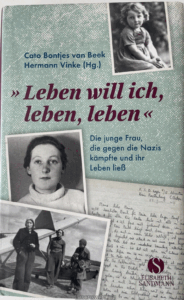
I want to live, live, live.
Personal example of:
–
·
„You just talk – and nobody does anything about it.“
Cato Bontjes van Beek
Born in Bremen in 1920, Cato Bontjes van Beek she is the daughter of the dancer and painter Olga Bontjes van Beek and the ceramicist Jan Bontjes van Beek. After her parents’ divorce, at the age of 17 she went to England to learn the English language. She devoted herself intensively to literary, philosophical, and religious questions.
After her return from England, she completed a vocational training in office technology and worked as an office clerk in Bremen. In the autumn of 1939, she moved to Berlin and began an apprenticeship as a ceramicist in her father's workshop. From the autumn of 1940, she organized with her sister Mietje assistance for French prisoners of war and for persecuted Jews.
Since 1941 she has been friends with Heinz Strelow and has connections to Harro Libertas Schulze-Boysen and other members of the resistance group “Red Chapel“. Together with Strelow she is involved in the dissemination of the “AGIS“ flyer. Cato Bontjes van Beek On September 20, 1942, Heinz Strelow is arrested; on Cato Bontjes van Beek October 1, 1942, Heinz Strelow is also arrested. Together they are sentenced to death on January 26, 1943. Heinz Strelow is murdered on May 13, 1943, and on August 5, 1943 in Berlin-Plötzensee.
© Memorial to the German Resistance
- A memorial stone for Cato Bontjes Van Beek is located on the family grave in the Fischerhude cemetery. A path has been named after her in the village. Fischerhude has been included in the list of places in Lower Saxony that are dedicated to women: as a women place Cato Bontjes van Beek.
- A plaque was placed in front of her last residence at Kaiserdamm 22 in Berlin-Charlottenburg. A plaque in the foyer of the Schöneberg Town Hall commemorates her.
- The Cato Bontjes van Beek dedicated archive at the - Cato Bontjes van Beek Gymnasium in Achim was included in the Register of „Places of Remembrance“ by the Federal Central Agency for Political Education.
- In Bremen-Kattenturm there is the Cato-Bontjes-van-Beek Square.
- Regina Griebel: The female side of resistance: Cato Bontjes van Beek. In: Kurt Schilde (ed.): Eva-Maria Buch and the „Red Chapel“. Memories of the resistance against National Socialism. 2nd revised edition. Berlin 1993, pp. 136 ff.
- Regina Griebel: Cato Bontjes van Beek In: Hans Coppi/Jürgen Danyel/Johannes Tuchel (ed.): The Red Chapel in the Resistance against National Socialism. Berlin 1994, pp. 277 ff.
- Manfred Flügge: My longing is life. A story from the German resistance. Berlin 1998.
- Hermann Vinke (ed.): Cato Bontjes van Beek: I want to live, live, live. The young woman who fought against the Nazis and gave up her life. Munich 2020.
- Johannes Tuchel: „…considering how young we are, one cannot believe in death.“ Liane Berkowitz, Friedrich Rehmer and the resistance actions of the Berlin Red Chapel. Berlin 2022.

„You just talk – and nobody does anything about it.“
Ardi Goldman Kunst-
und Kulturstiftung gGmbH
Uniongelände
Hanauer Landstraße 188, 60314 Frankfurt am Main