Lingens
Hopefuls
–
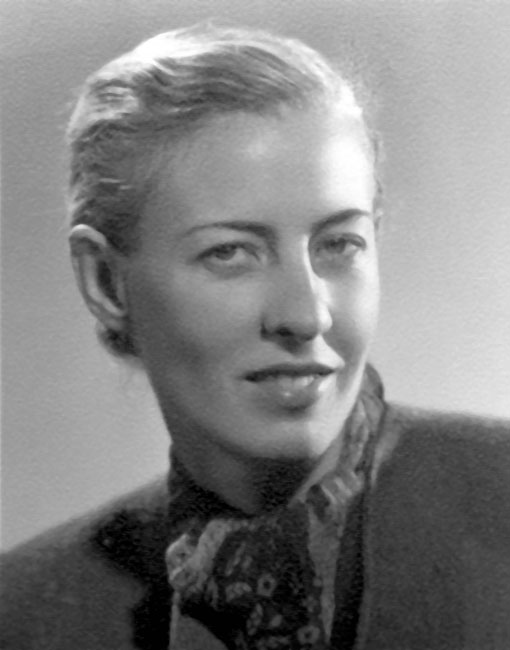
PORTRAIT
- Navigate to the location
I did not allow myself to rob myself of my honor and self-respect.
–
·
„If I had now failed... and let this one person die whom I might have saved, just because I feared the personal danger that was associated with it...,
Then I made the mistake that the entire German people made...“Ella Lingens
Ella Reiner initially became a lawyer and then studied medicine. Since 1926 she has been a member of the Social Democratic Workers' Party. In 1938 she married the doctor Kurt Lingens. In 1939 their son Peter Michael was born.
The Lingens couple rejects National Socialism. During the November pogrom in 1938 and after the beginning of the deportations in 1942, they take in Jewish victims of persecution. In addition, they help many Jewish women and men escape.
In 1942, together with their friend Karl Motesiczky, they prepared the escape of a group of Polish Jewish women and men to Switzerland. However, a Jewish escape helper reveals the escape plans to the Gestapo. On October 13, 1942, they are arrested in Vienna for „promoting the Jewish cause.“ They manage to get their three-year-old son to safety in time.
Ella Lingens After four months in police custody, she is transferred to the Auschwitz concentration camp. There, she works as a doctor under SS doctor Josef Mengele in the medical ward. In April 1945, she experiences the liberation at Dachau concentration camp.
In March 1964, Lingens testified as a witness during the first Auschwitz trial in Frankfurt.
In 1980, she was honored by the Israeli memorial Yad Vashem as a „Righteous Among the Nations.“.
© Memorial to the Silent Heroes
After the end of the Second World War, Ella Lingens as a witness to history she worked to uncover the crimes of National Socialism. She gave lectures in schools to educate about the ideology of fascism, the reality of war, and the systematic policy of oppression and extermination of the Nazi regime.
She worked in various clinics as well as in Austria’s public health system – most recently until 1973 as a ministerial councilor in the Federal Ministry of Health.
- In 1980, she was honored by the Israeli memorial Yad Vashem as a „Righteous Among the Nations.“.
- In 1997, a Viennese community building was Ella Lingens named after him.
- Since 2006, an general education high school (AHS) in Vienna-Floridsdorf has been named after her. Ella-Lingens Gymnasium.
- In 2012, a street in the 22nd district of Vienna, Donaustadt, was named after her – the Ella-Lingens-Straße.
- In 2016, a place in the Munich district of Giesing was given the name Ella-Lingens-Platz.
- Ella Lingens: A woman in a concentration camp. Munich 1966.
- Hermann Langbein People in Auschwitz. Frankfurt 1980.
- Peter Michael Lingens (ed Ella Lingens.): Prisoners of Fear. A Life in the Service of Resistance. Vienna 2003.
Extract from the testimony of a witness Ella Lingens at the Frankfurt Auschwitz trial, March 1964
In: H.G. Adler Hermann Langbein, Ella Lingens-Reiner (ed.): Auschwitz – Testimonies and Reports:
„Usually, one could just watch in silence during the selection process, but once I did take some action. A few days before a selection, they called me to the „Political Leadership“ of the camp… The patient was a woman named Lejman from Frankfurt am Main.”.
… from the end of August 1943 to February 1944, it took place every four weeks, not only in the sick blocks but also in the camp, with 500-1000 women being selected each time – and it was immediately clear to me that Frau Lejmann would be among the victims. I went to her and found my fears confirmed. The young woman was in a state of extreme agitation, shaken by fear and despair, and clung desperately to my hand. „Help me!“ she kept repeating…
The camp doctor had just told me that I should just try to be unobtrusive and not appear unpleasant; my discharge from the camp was scheduled for the next few weeks. If I used this woman as a German „Aryan,“ I risked stirring up the reluctance of the Waffen-SS and thereby calling my discharge into question.
Only someone who was in the concentration camp themselves, without knowing how long it would last, can understand what it means to hold on to even the vaguest hope of liberation. My child was three years old when I was separated from him. Only someone who has children themselves can understand how great and how difficult it is to bear a mother’s longing for her little son. I walked along the camp road in the darkness of the parting winter day, alone and tormented. As far as the eye could see, gray barracks, watchtowers, electric barbed wire – a desolate, ugly image. From here I was supposed to be able to escape this place of thousandfold torment, and now I was to question that by making myself unpopular because of a woman named Lejmann, whom I actually didn’t know at all…
Time was pressing; I had to decide whether I still wanted to do anything at all successfully. In my mind I saw my little boy before me and heard his tender voice as he begged me goodbye, his arms around my neck: „Mommy, stay with me!“ And then the dark eyes of the young female companion looked pleadingly at me, and a voice filled with bitterness said: „I was so happy to talk to a German woman.“ In me there was not only the reckless longing for freedom and life combined with the fierce compassion for this unfortunate creature; there was also the duty as a human being and doctor to help, the duty of the mother to keep her child alive, because every further day in the camp meant a deadly danger. It should not be said to me that the decision was of course a matter of course. I agonized and could not come to an end. But one thing became clear to me: Maybe I could say that my life and my child were more important to me than the foreign woman.
But it wasn’t just about that alone. If I failed now, if I shrugged my shoulders and let that one person die whom I might have saved, just because I feared the personal danger that was associated with it, then I made the mistake that the entire German people did… There aren’t that many who arranged and carried out all those atrocities. But there are infinitely many who let them happen because they didn’t have the courage to stop them, because they retreated with the sigh of „What can one do?“ from the affair, where perhaps sometimes a way to intervene could have been found. If I were now to go as far as that, too, by silently withdrawing out of fear that I would have to remain in the camp longer, then I would not have acted any differently than those who were still outside and watched in silence, out of fear that they would end up in the concentration camp. Then it was indeed successful for the SS to „educate“ me, as the Gestapo official who sent me to the camp put it.
But then the victim I had brought up before was pointless in my life; then I could have stayed at home quietly right away. In me, pity and a sense of duty did not prevail; in me, hatred of the system that wanted to humiliate me and rob me of my honor and self-respect prevailed. So I said to my son in my mind: „Child, maybe you have to wait even longer for your mother, but when she then returns to you, then let her be able to look you in the eyes; then you need not be ashamed that your mother tongue is German.“
© Yad Vashem
„If I had now failed... and let this one person die whom I might have saved, just because I feared the personal danger that was associated with it...,
Then I made the mistake that the entire German people made...“
Ardi Goldman Kunst-
und Kulturstiftung gGmbH
Uniongelände
Hanauer Landstraße 188, 60314 Frankfurt am Main