Seitz Walter
Hopefuls
–
PORTRAIT
- Navigate to the location
We are not those who rush into things. We have reverence for life. That is our strength and our weakness.
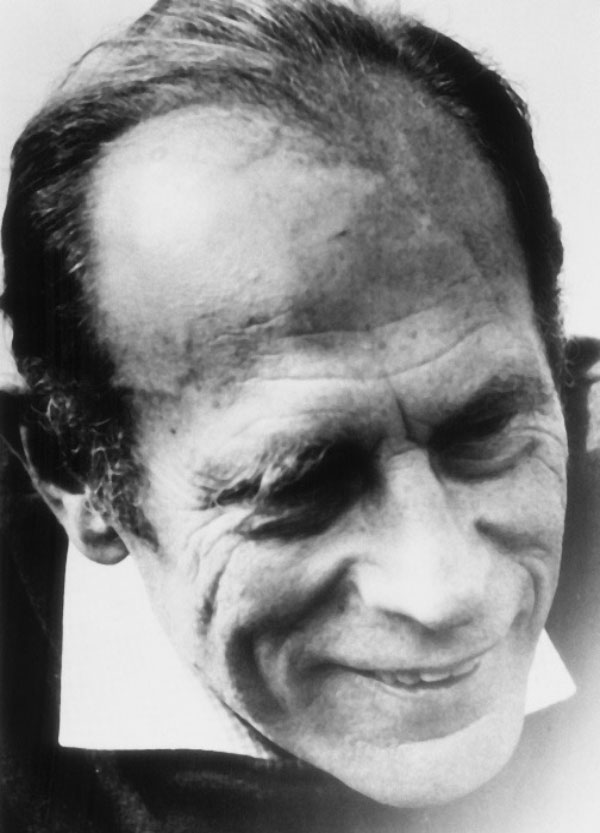
The native Bavarian lived in Berlin during the Second World War and worked as a doctor at the Charité. As one of the opposition members around the journalist, he Ruth Andreas-Friedrich helped Jews who had fled to the underground. Around 1943, he was Walter Seitz drafted to serve in a Silesian evacuation hospital and lost contact with the Berlin aid network „Onkel Emil” for a time. His members sorely miss his help in the medical treatment of the ill refugees. Meanwhile, Seitz wrote several times to forced laborers on the Eastern Front, knowingly causing them to become ill—and was denounced.
Now he has to go underground himself in order not to be arrested. After the failed assassination attempt on Hitler on July 20, 1944, he suddenly reappears in Berlin. He manages to move into the widow’s apartment as a tenant. He immediately makes himself available to the group „Onkel Emil” again. For Ralph Neumann, who found shelter with Ruth Andreas-Friedrich his sister Rita, Seitz arranged a Dutch passport in the spring of 1945. With an accomplice, he then steals „flight clearance certificates” at a map shop. With these forms, a stolen government stamp and fake police registration and deregistration forms, the group Walter Seitz can obtain food stamps and thus food for the hidden people. This can help them survive the end of the war.
© Memorial to the German Resistance
After the war, he Walter Seitz initially worked as a public health physician in Berlin-Steglitz. In 1946, he became an assistant physician at the
He was appointed to the I. Medical Clinic of the Charité before returning to his hometown of Munich in 1947.
There he took over the management of the Medical University Polyclinic at the Ludwig Maximilian University.
In addition to his medical career, Seitz was also politically active. From 1950 to 1954, he was a member of the Bavarian State Parliament and served on several committees, particularly in the fields of social and cultural policy. He was also a member of the state health council – a testament to his extensive commitment to the common good.
- Ruth Andreas-Friedrich The Shadow Man. Diary Records 1938-1945. First publication Hamburg 1947.
- Karin Friedrich Time Flecks. A Family Biography. Munich 2000.
- Wolfgang Benz: Protest and humanity. The resistance group „Onkel Emil“ in National Socialism.
Ditzingen 2020.
Ardi Goldman Kunst-
und Kulturstiftung gGmbH
Uniongelände
Hanauer Landstraße 188, 60314 Frankfurt am Main