Moltke
Hopefuls
–
PORTRAIT
- Navigate to the location
It is always worth doing something that you wouldn’t do for yourself. That can be found almost everywhere on this earth.
Personal example of:
–
·
… all my life, even in school, I have fought against a spirit of narrowness and violence, arrogance and a lack of respect for others, intolerance and absolute intolerance, relentlessly and consistently against what is inherent in the Germans and what found its expression in the National Socialist state.
Helmuth James Graf von Moltke Letter of farewell to the sons Caspar and Konrad, October 11, 1944
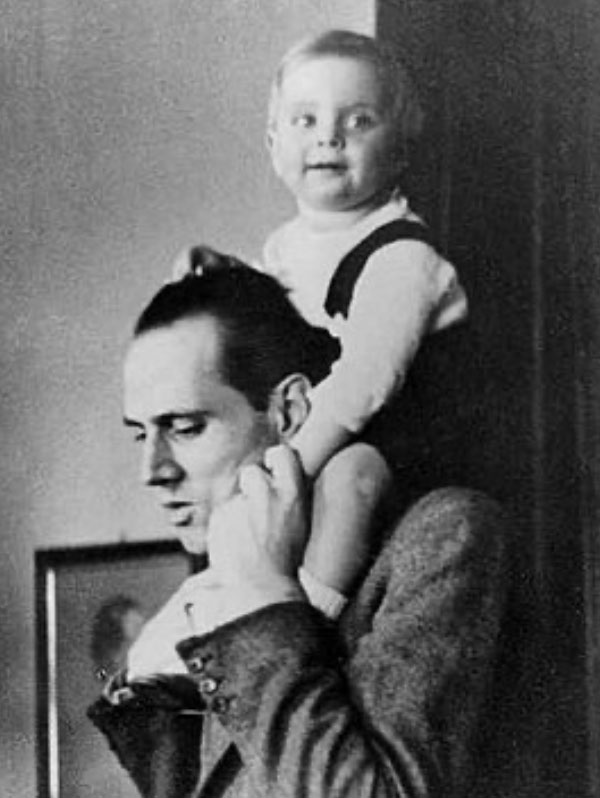
Helmuth James Graf von Moltke Studied law and political science in Berlin from 1925 onwards. He is actively involved in running a voluntary work camp for students, peasants and industrial workers in Silesia. Moltke, who is close to the democratic forces of his time, follows Hitler’s rise with open criticism. Therefore, in 1933 he gave up a judicial position and settled in Berlin as a lawyer in 1935. Between 1935 and 1938, he also completed his training as a British barrister (Barrister) and plans to establish a law firm in London, which is prevented by the start of the war in September 1939. In the same month, Moltke is assigned as a War Administration Council member to the Foreign Affairs and Defense Department of the Supreme Command of the Wehrmacht in Berlin. As an expert on war and international law, he tries to oppose injustice and arbitrary rule. He is particularly committed to the humane treatment of prisoners of war and the observance of international law. As early as 1939, Moltke authored the first think pieces on Germany’s political reorientation.
In early 1940, he Peter Graf Yorck von Wartenburg joined a group of opponents of the regime led by Moltke. Moltke and Yorck became the leading figures of the Kreisau Circle that emerged from this and participated in most of the deliberations in Berlin and Kreisau. Moltke tried to expand his contacts with Protestant and Catholic church leaders and with the leaders of the political social-democratic opposition through systematic expansion. After Moltke warned members of the Solf Circle about being monitored by the Gestapo and this was discovered, he was arrested on January 19, 1944. His involvement in the coup plans was only revealed after the failed coup attempt on July 20, 1944. On January 11, 1945, the People's Court sentenced him to death. Helmuth James Graf von Moltke He was murdered in Berlin-Plötzensee on January 23, 1945.
© Memorial to the German Resistance
In 1964, Deutsche Bundespost dedicated a postage stamp to James von Moltke on the 20th anniversary of July 1944. Another postage stamp from the series "Straight-Lined Democrats" was issued in 2007 to mark the 100th anniversary of Moltke and Claus Schenk Graf von Stauffenberg.
In 1990, the city of Görlitz renamed the former Thälmannstraße into James-von-Moltke-Straße.
The book publication: Letters to Freya 1939–1945 was awarded the Geschwister-Scholl-Preis in 1989
In 2001, the German Society for Military Law and Humanitarian International Law e. V. established the Helmuth-James-von-Moltke Prize for outstanding legal contributions in the field of security policy.
In 2024, a statue was dedicated in his honor at Christuskirche (Wandsbek, Hamburg).
Foundation Gedenkstätte Deutscher Widerstand (ed.): Thematic catalogue 12. The Kreisauer District. Berlin 2018, 2nd edition.
Olaf Jessen: The Moltkes. A Biography of a Family. C. H. Beck, Munich 2010.
Elke Endrass: Together against Hitler. Father Alfred Delp and . Helmuth James Graf von Moltke Stuttgart 2007.
Beate Ruhm von Oppen (ed.): Helmuth James von Moltke: Letters to Freya 1939-1945. 2nd edition, Munich 1991.
Beate Ruhm von Oppen (ed.): Helmuth J. Graf von Moltke: Letters to Freya 1939-1945. Munich 1988.
Freya von Moltke, Michael Balfour, Julian Frisby: Helmut James von Moltke 1907-1945. Advocate of the Future. Stuttgart 1975.
The Moltke Project – When the World Falls Apart. In: Dramatic reading based on the „Farewell Letters from Tegel Prison“ by Helmuth James and Freya von Moltke. Directed by Michael Becker. Available for booking at: 0170/ 2158453.
…because we thought together. A documentary about Helmuth James von Moltke and the Kreisau Circle. How common reflection on a different, better Germany during National Socialism became the basis for resistance. Directed by Hellmut Sitó, Hellmut Schlingensiepen and Christian Bimm Coers. Germany 2007.
In his letters, which Helmuth James von Moltke sent from the Gestapo detention to his two sons Helmuth Caspar and Konrad between January and October 1944, he describes his eventful life on the estate of Kreisau, the turmoil of the First World War and the time after it. The son, Helmuth Caspar von Moltke, documented these moving moments.
The audio CD is available free of charge to all interested parties. If you are interested, please contact the „Freya von Moltke Foundation“ for the new Kreisau.
Excerpt from Freya's letter to Helmuth James.
Berlin, September 29, 1944
My darling, my heart, my beloved, how wonderful that I can write to you again properly. How gratifying that we were able to see each other. I am very happy about it. My heart, I believe to know what it looks like in you. I belong to you, and that will remain so forever. (…)
You still have a long way to go. Since you have never really lived your life, you do not have to find the prospect of your final days unpleasant. You have always told me that this form of death is the best. I hope that is the case and that you are not afraid. I know that you are firmly in God’s hands. And we have good predecessors: Mami, Carl Bernd, Granny, Daddy. You will also come to like that. (…)
Your life seems beautiful and complete to me. You die for something that is worth dying for. The fact that you could have become a „great“ man is irrelevant. That the bomb didn’t explode in front of your window in January was important. I believe in the meaning of your death now. My friend, do you also feel that we are united? I am not a spiritual person, but I grow like a plant in this world. (…)
You don’t have to worry about our lives, that of the little boy and mine. I’m not afraid either. We’ll manage to make it through, with and without Kreisau, with and without money. The little boy will grow up all right. I’ll call him C.chen; you died from an illness; more about that later. As long as I can, I’ll stick with Kreisau or Berghaus. (…)
My dear Jäm, you must die in the certainty that apart from God, I belong only to you. The 15 years were our life. What comes next will be a life for the little ones, for other people, for things; I don’t yet know what, but our life, my dear Jäm, is now over. You always told me that you would die early. You promised me seven more years, but how much does quantity matter? It’s about quality. How fortunate that I have always consciously perceived every minute as a gift with you. We have enjoyed the greatest happiness there is in this world.
How good that you have decided to be with me, how good that I have taken the little ones from you for me. I will grow old and change, but in me you will always remain, until I die and I can find you again.
My dear, how wonderful it was to see you properly yesterday. I could already see what you looked like even before you had discovered me. You saw the same thing, and when we looked at each other, we both knew it.
So, my dear, now I’m going to C.D. to sleep. I wrote this letter in peace, with happiness, gratitude and tears. The tears belong to me. Often I let them roll down from my face when we are together. You know how it goes with me!
I am just as grateful as you are. Your P.
Helmuth J. Graf von Moltke: Letters to Freya 1939-1945. P. 37-39.
… all my life, even in school, I have fought against a spirit of narrowness and violence, arrogance and a lack of respect for others, intolerance and absolute intolerance, relentlessly and consistently against what is inherent in the Germans and what found its expression in the National Socialist state.
Ardi Goldman Kunst-
und Kulturstiftung gGmbH
Uniongelände
Hanauer Landstraße 188, 60314 Frankfurt am Main