Process
Hopefuls
Ground relief
- Navigate to the location
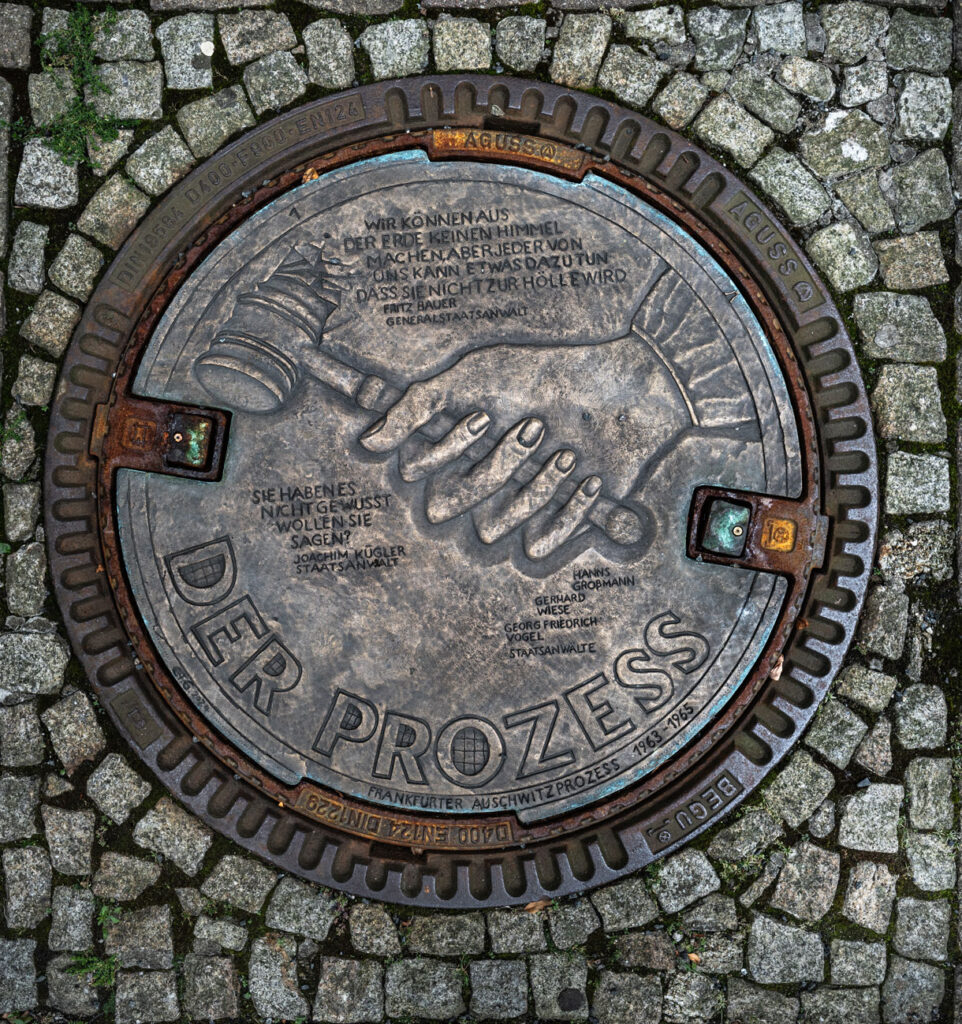
We cannot make a heaven out of the earth, but each of us can do something to ensure that it does not turn into hell.
„What remains constant in this process is undoubtedly only part of the truth – but it is truth.“
Auschwitz survivor Hermann Langbein
„We cannot make a heaven out of the earth, but each of us can do something to ensure that it does not turn into hell.“
This phrase figuratively represented what began on December 20, 1963 in the Frankfurt Römer: a trial that was intended not only to clarify legal culpability but also to open a new chapter in dealing with the Nazi past.
For the first time, not a single individual crime was being tried; rather, the functioning of an entire murder apparatus was being examined: Auschwitz as a system – with all its participants, processes, and structures. 22 men sat on the bench: guards, administrative officials, doctors – all part of the camp, all part of the machinery of extermination.
For a long time, German society after the war ignored the matter. Many perpetrators continued to live unmolested. There was a lack of political and legal will to investigate the matter. But then a turning point came: A former Auschwitz inmate showed former Gestapo officer Wilhelm Boger around the camp. Journalist Thomas Gnielka then handed over explosive documents to Fritz Bauer the Hessian state prosecutor: lists of alleged „murdered in flight“ inmates – and the names of those responsible.
Fritz Bauer He recognized the historical dimension. He wanted to make the functioning of Auschwitz visible – and confront society with the suppressed truth. Together with a young team of prosecutors – Georg Friedrich Vogel, Joachim Kügler and – Gerhard Wiese he pushed forward the investigations. Witness statements were collected, evidence secured, the indictment prepared.
On December 20, 1963, the main trial began. Due to the great interest, it continued in the Gallus House from April 1964 onwards. In 183 days of hearings, 360 witnesses testified – over 200 survivors reported under great personal pressure of selection, forced labor, torture, and murder. For many, it was the first time they spoke publicly about their experiences in Auschwitz.
The defendants admitted their roles in the camps, but relied on „obedience to orders.“ The court faced the challenge of legally evaluating individual culpability within a state-organized extermination apparatus.
On August 20, 1965, the court handed down the verdicts: Six defendants received life sentences, while others received significantly milder sentences. Three were acquitted. For many observers – including myself – Fritz Bauer the verdicts were disappointing. The legal framework at the time was insufficient to adequately punish the full extent of the crimes.
And yet the trial was a milestone: it made the crimes of Auschwitz visible. It forced an entire country to listen – and marked the beginning of a lasting engagement with its own history.
The Auschwitz survivor Hermann Langbein put it this way:
„What remains constant in this process is undoubtedly only part of the truth – but it is truth.“
Source: Schlaglichter. Perpetrator in court: Auschwitz trial. Exhibition by the Institute for City History Frankfurt am Main: A glimpse into the past: Frankfurt in the 1960s.
- Hermann Langbein The Auschwitz Trial: A Documentary. 2 Volumes. Frankfurt am Main 1995.
- Devin O. Pendas: The Auschwitz Trial: Genocide in Court. Munich 2013.
- Bernd Naumann: The Auschwitz Trial: Report on the criminal case against Mulka and others before the Frankfurt am Main Court of Assizes 1963-1965. Updated new edition with a preface by Werner Renz. Paperback. Hamburg 2013.
- The Auschwitz Trial in Frankfurt, 1963–1965: Part 1: The Trial. German Television History. YouTube, 15.10.2015.
- The Auschwitz trial in Frankfurt, 1963–1965: Part 2: The Trial. German television history. YouTube, 15.10.2015.
- Opening of the 1st Frankfurt Auschwitz Trial, December 20, 1963. HR-Retro Hessenschau.
- ARD Media Library, 19.10.2022.
- The Investigation. Film about the first Frankfurt Auschwitz trial. Directed by RP Kahl. Germany 2024.
- Audio recordings of the first Auschwitz trial (1963–1965). Fritz Bauer Institute. History and impact of the Holocaust. Testimonies, texts and materials.
- The first Frankfurt Auschwitz trial: Interrogation. SWR2 Archive Radio, 17.09.1964.
„What remains constant in this process is undoubtedly only part of the truth – but it is truth.“
Ardi Goldman Kunst-
und Kulturstiftung gGmbH
Uniongelände
Hanauer Landstraße 188, 60314 Frankfurt am Main